People Forget Too Easily: A Powerful Lesson in Empathy
A touching moral story about a hospital experience, showing how people forget kindness, with life lessons on gratitude and empathy.
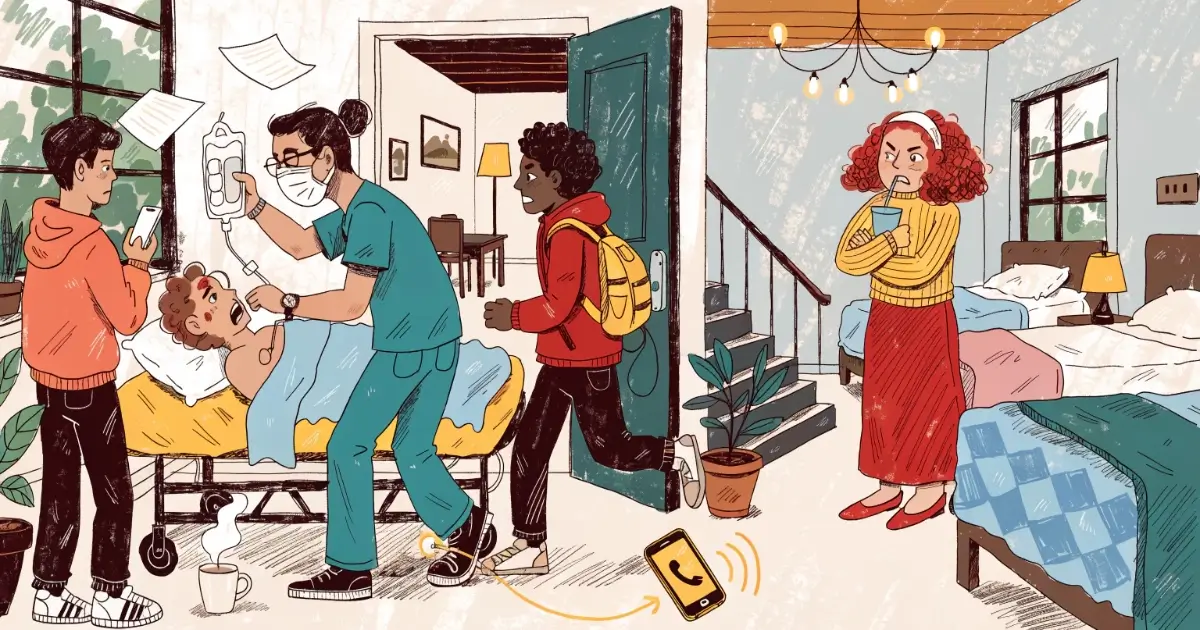
Overwhelmed Between Emergency and Responsibility
Sometimes the hospital overestimates my ability. I am assigned to handle emergency cases while also being responsible for patients in the ward upstairs.
Running back and forth between the two, I often feel completely overwhelmed, dizzy, and mentally exhausted.
One day, a young woman brought her mother to the emergency room. One side of her mother’s body could not move.
I immediately suspected a brain hemorrhage.
I became extremely tense and stayed by her side, continuously checking her blood pressure and personally accompanying her to the CT scan room.
Choosing What Matters Most
At the same time, my phone kept ringing.
It was the nurse from the ward upstairs, urging me to come quickly because many patients were asking why the doctor had not arrived yet.
Without hesitation, I replied:
“I have no choice. The patient beside me is in critical condition. I must handle this first. Please ask them to wait.”
The young woman saw everything and gratefully nodded at me.
“I’m sorry for taking up your time,” she said.
I replied that it was okay.
In life, there are always priorities. Every day we are faced with endless tasks, and what we must do is determine which one is the most urgent.
That morning, I sacrificed the time of other patients to save her mother’s life.
After a series of treatments, her mother finally came out of danger.
I arranged for her to be admitted to the ward upstairs for further observation.
A Similar Situation, A Different Reaction
The next morning, I returned to the emergency room.
By coincidence, another patient was in a critical condition.
Once again, I stayed by the patient’s side—drawing blood, checking breathing, not leaving even for a moment.
My phone started ringing again.
The nurse told me patients upstairs were complaining again.
I responded the same way:
“Please ask them to wait. Their conditions are stable.”
But this time, the nurse urgently said:
“No, you can’t! You really can’t!”
Then she added:
“Do you know? It’s the daughter of the brain hemorrhage patient you admitted yesterday. She is at the nurse station right now, shouting and asking where the doctor has gone!”
When Gratitude Turns Into Entitlement
I was stunned.
I couldn’t understand why this was happening.
But I knew if I didn’t go upstairs immediately, things would escalate.
So I quickly asked another doctor to temporarily take care of the critical patient and rushed upstairs.
When I entered the ward, I came face to face with the young woman.
Seeing her angry expression, I said nothing at first. I walked to her mother’s bedside and asked:
“Are you feeling uncomfortable now?”
As expected, her mother shook her head and said:
“No, I’m fine.”
I then turned to the young woman and asked:
“So, why were you urgently looking for me?”
She answered immediately, still full of dissatisfaction:
“There’s nothing wrong. I just think that since we are hospitalized, a doctor should come to check on patients. No doctor has shown up all morning. What kind of hospital is this?”
Hearing her speak so confidently, I couldn’t help but feel angry.
I asked her:
“Didn’t the nurse tell you that I am downstairs handling an emergency?”
She let out a cold laugh and said:
“No matter who you are saving, since we are admitted, I have the right to have a doctor appear whenever we need.”
The Bus Analogy
At that moment, a familiar scene came to my mind.
Whenever a bus is full, people who haven’t gotten on will shout:
“Please move forward a bit! Just a little more and I can get on!”
But once they get on and stand inside the crowded bus, they immediately shout:
“Don’t let anyone else on! It’s too crowded! The bus will flip over!”
The Truth About Human Nature
People forget.
The moment their position changes, they forget what they once experienced.
After her mother’s condition stabilized, the young woman completely forgot that just the day before, I had let many other patients wait a long time in order to save her mother.
She only remembered that her own needs were important.
She placed herself at the center of everything.
But she forgot to put herself in others’ shoes.
When Roles Reverse
Situations are always changing.
Perhaps she can only hope that her role will never reverse again.
Because one day, if her mother becomes critically ill again, other patients might use the exact same reason to pull me away from her.
And when that day comes, she will regret it deeply.
Reflection
Does this story make you think?
People are forgetful.
The moment their role changes, they forget their past experiences.
This applies not only in life, but also in love and work.
If someone in your life constantly reminds you to look at things from another perspective, then congratulations—
You have found a true partner in love, a genuine friend in life, or a valuable teammate at work.
Moral of the Story
People tend to forget kindness once their own problems are solved.
True wisdom lies in remembering how it felt to be in someone else’s situation.
Empathy is the ability to step outside yourself and understand others.
Why This Story Still Matters Today
In today’s fast-paced world, many conflicts arise because people only see things from their own perspective.
This story reminds us:
- Roles can change at any time
- Gratitude can quickly turn into entitlement
- Empathy is essential for a better society
If we learn to think from others’ perspectives, relationships become smoother and society becomes more harmonious.
Related Moral Stories
If you enjoyed this series, you may also like: