Happy Bedtime Stories for Adults to End Your Day
Enjoy happy bedtime stories for adults designed to relax your mind and lift your mood and end your day peacefully.

Looking for happy bedtime stories for adults to end your day on a positive note? This collection is designed to help you relax, unwind, and gently shift your mindset toward calmness and joy before sleep.
These bedtime stories for adults to read focus on uplifting moments, small wins, human connection, and meaningful reflections-perfect for creating a peaceful nighttime routine.
If you’re exploring more options, you can also check out our full collection of → best bedtime stories for adults
Story 1 - Happiness from Simplicity

Once there was a fisherman who went out to sea every day.
Each time he cast his net only once. No matter how many fish he caught, he never threw the net a second time.
One day, someone asked him:
“Why don’t you cast your net a few more times? If you catch more fish, you can earn more money.”
The fisherman replied:
“And what would I do with more money?”
“You could live a happier life,” the man answered.
The fisherman smiled and said:
“With just one cast of my net each day, my family already has enough food and clothing. In my free time, I spend time with my loved ones or lie on the beach enjoying the sunshine. I already feel very happy. Why should I catch more fish?”
This simple story carries a powerful truth that many people spend decades learning:
Happiness is not directly proportional to wealth.
A simple life often holds more joy than a wealthy one.
Many people invest enormous time and energy searching for happiness. They climb to higher positions and accumulate more money - yet they still do not feel fulfilled.
Why?
Because human desire has no natural endpoint.
Material wealth may grow, but the spirit often grows emptier. At the same time, psychological pressure continues to build.
As American writer Lisa Plant once said:
“Happiness comes from a simple life. Simplicity is actually a new philosophy of living. When you observe life from a new perspective, you will discover that the simplest things are often the most beautiful.”
In reality, people do not need much to live well.
- Even if there are thousands of rivers, we only drink one scoop of water.
- Even if there are thousands of large houses, we only sleep on one small bed.
The fisherman felt happy because his desires were modest and his life was simple.
In contrast, many wealthy and powerful people feel troubled - because their desires are endless.
When a person becomes burdened by money, fame, status, or material ambition, life becomes exhausting. Happiness becomes increasingly difficult to feel.
However, the simpler life becomes, the more authentic, relaxed, and free a person feels.
And with that freedom comes a deeper, more lasting happiness.
Moral of the Story
True happiness does not come from endless wealth or ambition.
It comes from appreciating what we already have and living a balanced, intentional life.
When we learn to be content and genuinely grateful, happiness is always within reach - not somewhere in the future, but right here, right now.
Why This Lesson Matters More Than Ever
Modern society constantly encourages people to pursue more - more wealth, more success, more status.
But this relentless pursuit often leads to stress, burnout, and deep dissatisfaction.
The fisherman’s story reminds us that happiness doesn’t come from having more - it comes from appreciating what we already have.
In an increasingly fast-paced world, the philosophy of simple living is becoming more relevant, and more necessary, than ever before.
Story 2 - The Leaking Bucket

Long ago, a wealthy man hired a servant to manage his household.
Every day, the servant walked nearly two miles to a well outside the house to fetch water for his master.
He carried two buckets on a pole - one perfect and without flaw, the other marked by a small but persistent crack.
Because of that crack, every journey home meant a loss. By the time the servant arrived, only one and a half buckets of water remained.
After many months, the cracked bucket grew heavy with shame.
One day it finally spoke:
“I feel deeply sorry. Every single day, half the water leaks out of me. Because of my flaw, you work harder and risk the master’s anger. I am useless. Why do you still bother carrying me?”
The servant said nothing at first.
But the next time they walked to the well, he asked the bucket to look carefully at the path along the way.
For the first time, the bucket noticed something it had never seen before - beautiful flowers blooming along the entire roadside.
Many times, the servant had gathered those very flowers to brighten the master’s room.
The servant smiled and explained:
“I knew from the beginning that you were cracked and would leak along the way. So I planted flower seeds along the road. Every day, without realising it, you were watering them.”
He paused, then added:
“Even with your flaw, you have been bringing beauty into the world all along. What truly matters is not the crack itself - but learning how to find the value hidden within it.”
This gentle story holds a truth that modern life rarely teaches:
Imperfection does not mean uselessness.
In fact, the crack in the bucket did something the perfect bucket never could - it quietly nourished life along the way.
Many people carry their flaws like a burden, convinced that their weaknesses disqualify them from doing anything meaningful. They compare themselves to the “perfect bucket” and feel they will never measure up.
But the servant saw something different.
He didn’t try to fix the crack. He didn’t replace the bucket. Instead, he asked a deeper question: what can this flaw make possible that nothing else can?
We live in a world that celebrates perfection and hides imperfection.
Yet some of the most meaningful contributions in life come not from people who had everything figured out - but from those who found a way to turn their limitations into something quietly extraordinary.
- The person who struggled with anxiety and became someone others could truly confide in.
- The one who failed and, because of that failure, built something the world had never seen.
- The voice that cracked - and in cracking, moved people in ways a polished voice never could.
What looks like a flaw from the outside may be exactly the quality the world needs from you.
Moral of the Story
Your imperfections do not define your worth - they shape your path.
Sometimes our weaknesses create beauty and value in ways we could never have planned or predicted.
The question is not how do I fix my flaws - but how do I discover the unique good they make possible?
Why This Lesson Matters More Than Ever
Modern society applies relentless pressure to be perfect - perfect careers, perfect appearances, perfect lives carefully curated for the world to see.
But this pursuit of perfection often leads to exhaustion, self-doubt, and a quiet sense that we are never quite enough.
The cracked bucket reminds us that being imperfect is not something to overcome - it is something to understand.
When we stop trying to be the perfect bucket and start asking what our particular crack makes possible, we may find that we have been doing something beautiful all along without even knowing it.
Story 3 - Enthusiasm or Unwanted Help

An old grandmother hurried to catch a train because she needed to travel to a mountain village to help her daughter give birth.
However, her daughter’s in-laws lived in a very remote place, and the train normally passed by that village without stopping.
The grandmother kept begging the conductor, asking him to stop the train there so she could get off.
The conductor felt very uncomfortable about the request.
After thinking for a long time, he still did not dare to stop the train.
Finally, he came up with an idea.
He said to the grandmother:
“When the train reaches that village, I will slow down the train. At that moment, you can jump off the train. This way I won’t have to stop the train, and you can still get off.”
The grandmother happily agreed and said it sounded like a good idea.
When the train approached the village, the conductor really slowed down the train.
The grandmother stood at the first carriage and prepared to jump.
As the train slowed, she jumped off.
Because of the momentum, she could not stop immediately. Instead, she kept running along the platform beside the train.
Just as the last carriage passed by, a young man suddenly rushed forward.
He grabbed the grandmother and pulled her back onto the train.
Then he said proudly:
“Oh grandma! Luckily you met me!
Otherwise you would have missed this train!”
Moral of the story
Good intentions are not always enough.
Helping others without understanding their situation can sometimes make things worse.
What This Teaches
In modern society, many people want to help others quickly.
But true kindness requires understanding, communication, and awareness of the real situation before taking action.
Story 4 - Who Is Right, Who Is Wrong?
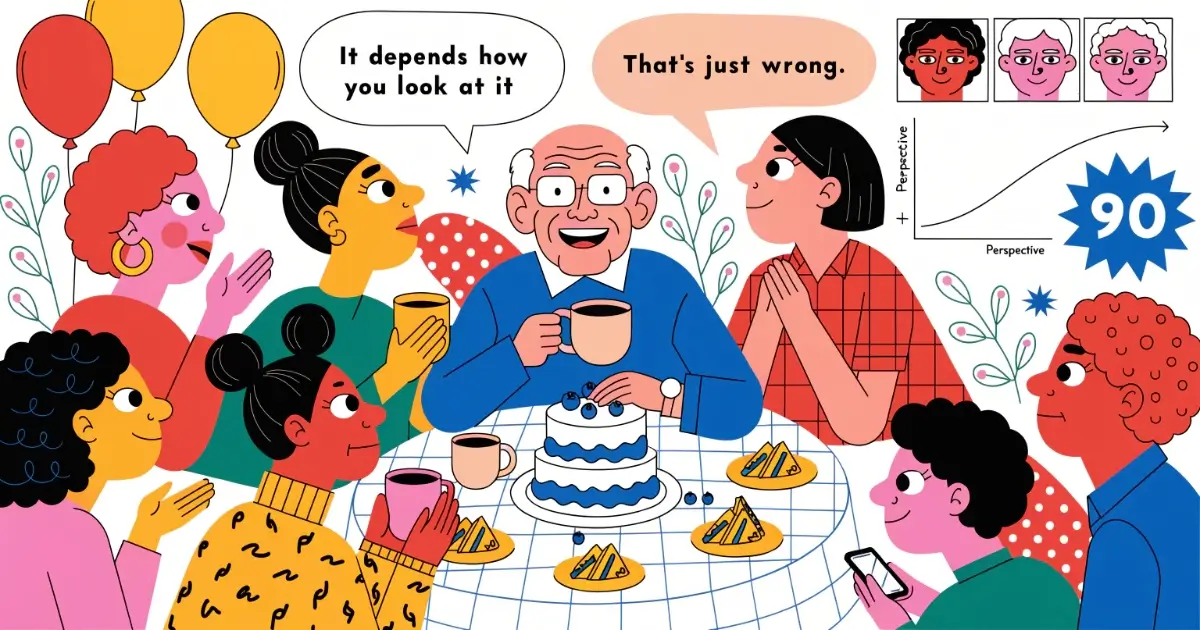
A grandfather was celebrating his 90th birthday.
The room was full of guests who had come to honour him - but more than the celebration, they couldn’t stop marvelling at the man himself. His face was bright, his energy sharp, his laughter easy. He carried his ninety years as though they weighed nothing at all.
Finally, one guest leaned forward and asked what everyone had been thinking:
“What is your secret to living such a long and healthy life?”
The grandfather’s eyes lit up. He set down his glass, smiled slowly, and said:
“Alright. I will tell you.”
“Sixty-five years ago, on the night my wife and I were married, we made a quiet agreement between ourselves.”
“We decided that whenever an argument arose between us, the person who was proven wrong would go outside and take a walk around the yard.”
He paused - just long enough to let the room lean in.
Then, with a warm and unhurried smile, he added:
“For sixty-five years, every time we argued - I was the one who went for the walk.”
What Does This Story Teach Us?
Communication experts have long observed that the most damaging conflicts between people rarely begin with the problem itself.
They begin with the question of who is right and who is wrong.
There is something deep in human nature that insists:
“There can only be one correct answer - and it has to be mine.”
So when conflict arises, winning the argument quietly becomes more important than solving the problem. The original issue fades into the background. What remains is pride, and the need to be right.
But consider this.
Look at the figure below - and ask yourself honestly: what do you see?

- A hexagon with three lines crossing in the middle?
- Six triangles?
- Six parallelograms?
- Six rhombuses?
- Six trapezoids?
Who is right?
Who is wrong?
The truth is:
Everyone is right - and everyone is also incomplete.
Moral of the Story
The same situation can be viewed from many different perspectives.
Understanding others often requires stepping outside our own point of view.
Why This Story Still Matters Today
In modern life, disagreements happen constantly - in families, workplaces, and society.
This story reminds us that conflicts are not always about right or wrong. Often they are about different perspectives.
When we learn to see things from another person’s point of view, communication becomes easier and relationships become stronger.
Story 5 - Letting Go of Anger
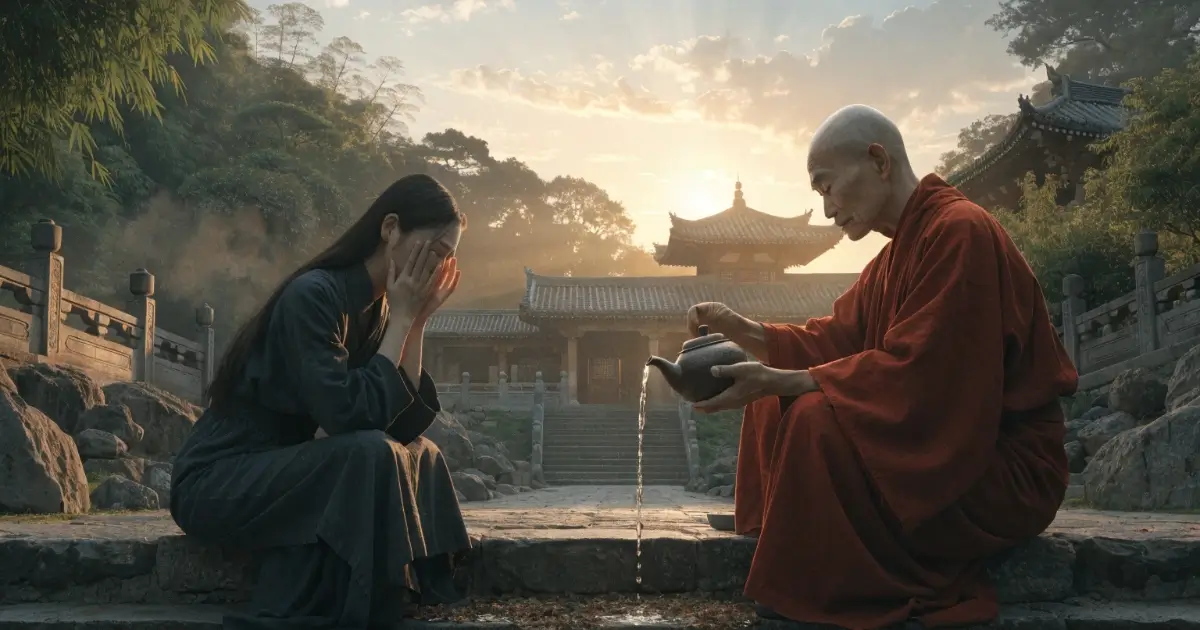
Long ago, there was a woman who lost her temper easily - not over great troubles, but over the small, forgettable things that fill an ordinary day.
She knew this about herself. And it troubled her enough that she sought out a wise monk, hoping he might help her find the stillness she could not find on her own.
The monk listened without interrupting.
Then, without a word, he led her into a meditation room, closed the door, and locked it from the outside.
She was alone.
The silence pressed in - and then, so did the rage.
She pounded on the door. She shouted. She demanded to be heard.
The monk said nothing.
When shouting brought no answer, her anger softened into pleading.
That brought nothing either.
So at last, she went quiet.
When the monk returned, he asked gently:
“Are you still angry?”
She said:
“I am angry at myself - for coming here, and for suffering like this.”
The monk replied:
“If you cannot forgive yourself, how will you ever find peace?”
Then he left again.
He returned a second time and asked the same question.
“No,” she said. “I am not angry anymore.”
“Why not?”
“Because anger is useless. It changes nothing.”
The monk shook his head slowly.
“Your anger has not disappeared. It has only gone quiet. When it returns - and it will - it will come back stronger than before.”
The monk came a third time.
“I am no longer angry,” the woman said, “because it simply is not worth it.”
The monk smiled - but gently, without triumph.
“As long as you are still weighing whether anger is worth it or not, the root of it remains. You are still its prisoner.”
The sun had begun to sink when the woman finally asked:
“Master - what is anger, truly?”
The monk did not answer with words.
He simply lifted his tea and poured it slowly onto the ground.
The woman watched the liquid soak into the earth and vanish.
And in that silence, something shifted inside her.
She bowed deeply, and left.
Moral of the story
Anger is like something another person spits out - and we are the ones who pick it up and place it in our own mouths.
Hold onto it and it poisons us. But leave it alone, and it dissolves on its own, the way tea disappears into the earth.
Anger is, at its core, using someone else’s mistake to punish ourselves.
Life holds so much that is worth our attention. Why surrender our peace to what does not deserve it?
What This Teaches
Modern life hands us endless reasons to be frustrated - deadlines, disappointments, people who push our limits without a second thought.
But this story reminds us that anger never resolves what caused it. It only adds weight to the mind that carries it.
Real strength is not the ability to fight back. It is the ability to let go - and to choose, again and again, the quiet on the other side of the storm.
Story 6 - The Marketing Strategy of Beggar Jack
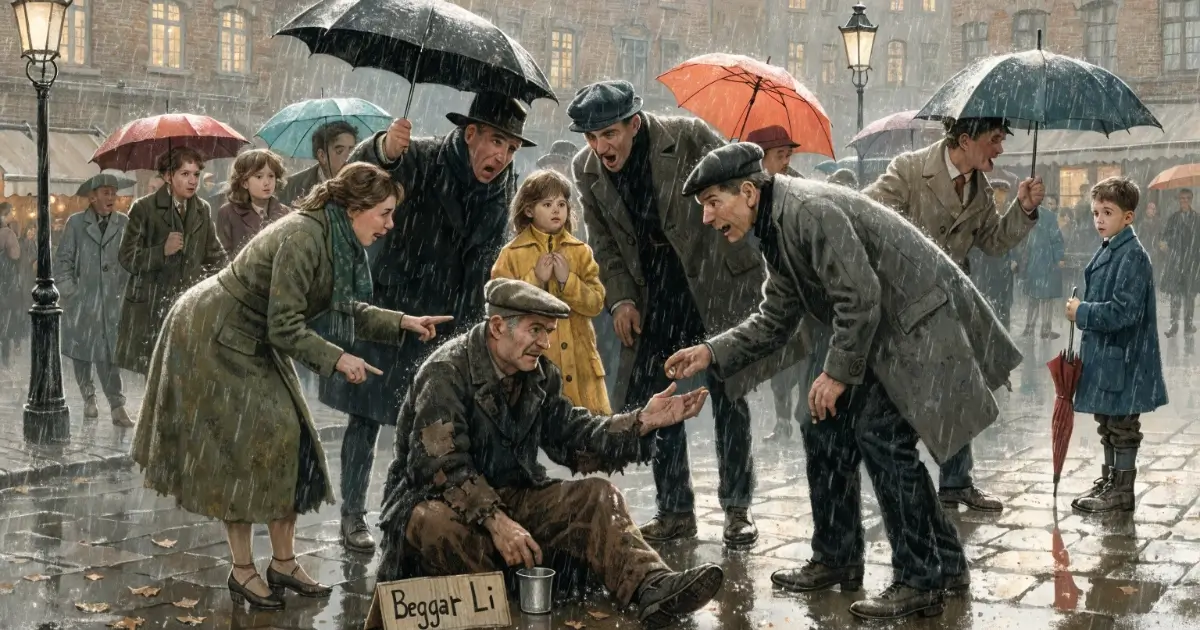
Marcus Webb had opened his creative consulting studio six months earlier.
Serious business was rare, but strange and amusing requests often appeared.
One morning, a poorly dressed man with messy hair stood at the door.
“Are you Marcus?” the man asked.
“I need your help planning something.”
“What kind of business are you in?” Marcus asked.
The man replied awkwardly:
“I used to be a businessman, but I lost everything. My house was mortgaged, my wife left me, and I have no special skills.
Now I survive by begging.
But begging has become highly competitive, so I want you to help me improve my performance.”
Marcus laughed.
“You’re already a beggar and you’re still talking about performance?”
The man replied seriously:
“Even in hardship, we should still pursue excellence.”
Impressed by his attitude, Marcus agreed to help.
First, Marcus helped him build a brand.
“What’s your name?”
“Jack.”
“Then your brand will be Beggar Jack.”
Next, he suggested that Jack specialize.
Instead of begging and collecting trash at the same time, he should focus entirely on begging at Central Square.
He should hold a bowl with coins inside and place a sign that read Beggar Jack.
But branding alone was not enough.
He needed differentiation.
From now on, no matter how much money people gave him, he should only accept fifty cents.
If someone gave one dollar, he should return the change and say:
“Thank you, but I only accept fifty cents.”
If someone gave less than fifty cents, he should politely return it and say:
“Sorry, the minimum is fifty cents.”
This unusual behavior would make people curious.
They would talk about him.
In other words, he would gain free advertising through word of mouth.
Two weeks later, Marcus visited Central Square to see the results.
From a distance, he noticed a crowd gathered around someone.
At the center stood Beggar Jack with a sign that read:
“Professional Beggar – Beggar Jack.”
He was busy receiving money and returning change.
People laughed, talked, and watched in amazement.
Some even applauded.
Later, Marcus explained the real idea behind the strategy.
“You are not running a begging business.
You are running an entertainment business.
In today’s world, attention is valuable.
Whoever captures people’s attention will attract money.”
Soon Beggar Jack became famous.
Moral of the story
Success often comes from differentiation.
When you offer something unique that captures people’s attention, even an ordinary activity can become extraordinary.
What This Teaches
In the modern attention economy, visibility and uniqueness are powerful assets.
Businesses, creators, and entrepreneurs succeed not only through hard work but also through branding and innovation.
This story humorously reminds us that creativity and differentiation can transform even the most unlikely situations into opportunity.
Story 7 - The Neighbor’s Hens
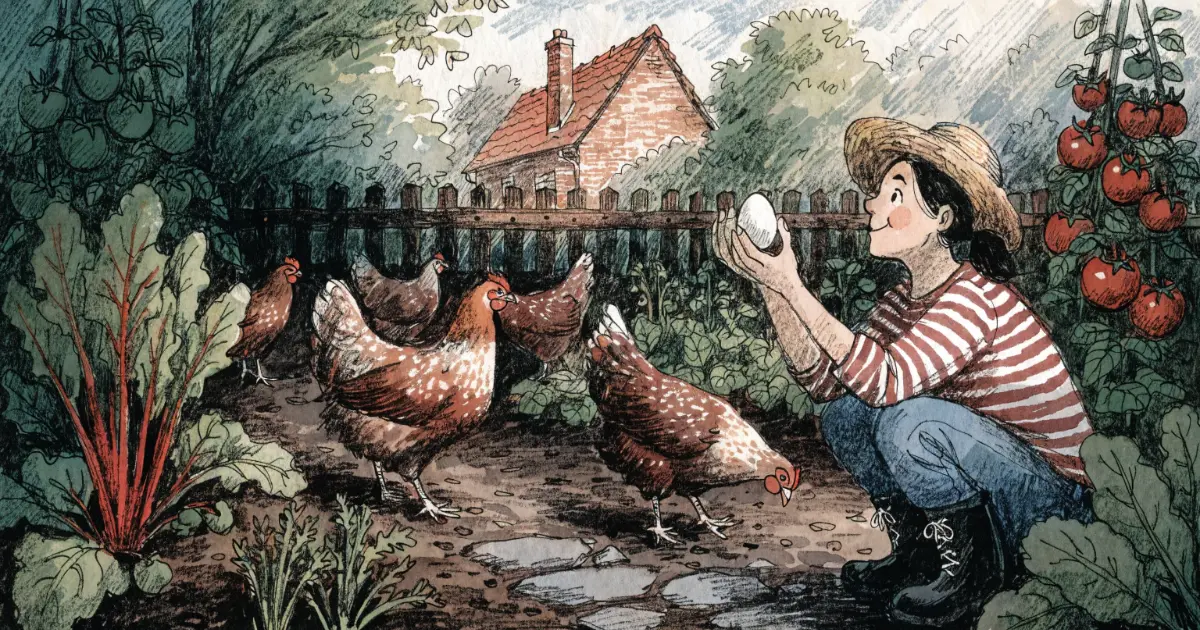
I used to live in an old neighbor with a stretch of open ground behind it. I turned it into a small vegetable garden - something I had put real time and care into growing.
The problem was my neighbors. They kept a dozen or so egg-laying hens in their backyard, and those hens had figured out how to wander over into my garden. They scratched everything up, pecked at the seedlings, and left the beds in a mess on a regular basis.
I spoke to the neighbors about it. More than once. They were always polite. They always apologized. They always promised to do something. And nothing ever changed.
I couldn’t bring myself to make it into a real argument - it felt too small a thing to damage the relationship over. But the hens kept coming, and the garden kept suffering.
One day I had an idea. I bought a bag of eggs, waited until the neighbors’ child came over to play, and sent the child home with the bag as a gift.
The next morning, the old woman from next door came to thank me. I waved it off warmly and said: “Please don’t mention it. We always end up with more eggs than we can eat - honestly, I should be thanking you for helping us get through them before they go off.”
She looked puzzled. “But I’ve never seen you keep any hens. Where are all these eggs coming from?”
I smiled. “Oh, I just pick them up in the vegetable garden every day. There are always several just lying around - more than we could ever finish.”
The hens never came back after that.
Moral of the story
A clever solution leaves everyone with their dignity - and no problem left to argue about.
What This Teaches
The direct approach had already failed - several times. The neighbors knew the hens were causing a problem. They apologized sincerely every time. And then nothing changed, because the inconvenience of fixing it still fell entirely on them, while the cost of not fixing it fell entirely on someone else.
One bag of eggs changed the equation. Suddenly their hens were laying eggs in someone else’s garden - eggs that were being happily collected and eaten. The cost had shifted. And without anyone raising their voice or threatening the relationship, the problem solved itself overnight.
This is what wisdom looks like in everyday life. Not always the loudest or most direct path - but the one that reaches the destination without leaving damage behind. The narrator could have fixated on the eggs and the principle of the thing. Instead, they kept their eye on what they actually wanted: a peaceful garden and a peaceful relationship with the people next door.
Why Happy Bedtime Stories Matter
Ending your day with positive emotions can improve sleep quality and reduce stress. These happy bedtime stories for adults are designed to create a gentle emotional shift-helping you feel lighter, calmer, and more at ease before sleep.
Reflection Questions
- What made you feel good in this story?
- Did it remind you of something positive in your own life?
- How do you feel now compared to before reading?
- Would you like more stories like this tomorrow?
Explore More Bedtime Stories
- Discover the full collection → explore our complete bedtime story collection
- Try shorter reads → prefer something quicker to read before bed
- Prefer deeper narratives → looking for a deeper, more immersive story
- Or looking for something even softer and cozier
- Or cool and uplifting bedtime stories