10 Short Moral Stories for Adults to Inspire and Reflect
Explore short moral stories for adults that inspire reflection, growth, and better decisions. Quick, meaningful reads with powerful lessons.
Looking for short moral stories for adults that offer meaningful life lessons? This collection features simple, thought-provoking stories designed to inspire reflection and personal growth.
These stories are short, easy to read, and perfect for anyone who wants a quick but impactful lesson.
If you prefer something quicker to read before bed, read quick calming stories
The Lost Pocket Watch
A farmer who worked on a large farm finished cleaning the stable one afternoon - and reached for his pocket watch. It was gone.
This wasn’t just any watch. His wife had given it to him, and it meant the world to him. He turned around, went straight back into the stable, and searched. He searched for a long time. He moved the hay, checked the corners, looked along every beam. Nothing.
He walked out of the stable feeling defeated.
Outside, a group of children were playing in the yard. The farmer had an idea. He called out to them:
“If any of you can find my pocket watch inside the stable, I’ll give you fifty cents.”
The children rushed in - excited, noisy, determined. They scattered across the stable, pulling at hay bales, checking troughs, digging into corners. After a good while, they all filed back out, one by one. None of them had found it.
The farmer’s heart sank even further.
Just as he was about to give up entirely, he heard a small voice.
“May I go in and try once more?”
It was one of the younger boys, standing off to the side. The farmer looked at him. If the whole group together couldn’t find it, how could one quiet child do any better? But there was nothing to lose. He nodded and said yes.
The boy went in alone. The door swung gently behind him.
A few minutes passed. Then the boy walked out - and in his hand was the pocket watch.
The farmer stared. “How did you find it?” he asked. “How on earth did you manage that?”
The boy answered simply:
“I didn’t do anything. I just sat down quietly on the floor and stayed still. After a while, I could hear it - tick, tick, tick. I followed the sound and there it was.”
Moral of the Story
Sometimes the answer isn’t found by doing more - it’s found by stopping, getting quiet, and listening.
Toast to Adversity, Salute Your Enemies
Here is something that sounds wrong but rings true: the person who has hurt you most deeply in your life is probably not your enemy. It is probably someone you loved.
We can forgive our enemies fairly easily. We never expected much from them in the first place. But the people who wound us most - the ones whose words still surface in our minds years later - are the people we trusted. Parents. Friends. Partners. Siblings. The ones we gave our real feelings to, and who either didn’t notice or didn’t care.
That kind of hurt goes deeper. And it takes longer to release.
But here is the other side of that coin, the part that is harder to see while you’re in the middle of the pain: those same people may have done you one of the greatest services of your life.
When life is comfortable, most people don’t push very hard. We settle into our habits, our routines, our good-enough version of ourselves. It is adversity - real adversity, the kind that comes from being betrayed or dismissed or knocked flat - that forces something new out of us.
There is a concept in some philosophical traditions sometimes called the “adversity teacher” - the idea that the obstacles placed in our path by difficult people and hard circumstances are not punishments. They are, in a strange and uncomfortable way, gifts. Not because suffering is good, but because what we become in response to suffering is often far greater than what we would have become without it.
The people who looked down on you, who doubted you, who walked away when you needed them most - they lit a fire. What you do with that fire is up to you.
There is a painter who has no hands. She paints with her mouth and feet. Her landscapes are breathtaking. She said: “Do not let adversity defeat you. In adversity, there is only one direction - up. A person’s true capability is forged in difficulty, because difficulty is almost never as impossible as it first appears.”
There is also a writer who spent her life in a body ravaged by severe muscular dystrophy. She described her experience of pain as existing in four levels: pain, mild pain, severe pain, and unbearable pain. She fought her body every single day. And she said this:
“I have never been concerned with what I have lost. Only with what I still have. The body can be bound and limited. But those limits cannot reach the soul. If anything, they make it stronger.”
There is a painter named Liang Dan-feng, who walked through great storms in her life with an open heart. These are not people who pretended their pain didn’t exist. They felt it fully. And they used it.
Life is a long journey. You walk. You stop. You walk again. Along the way, people join you and leave you - friends, partners, family members. Very few will stay for the whole trip. That is not a tragedy. That is simply what life is.
The only companion you are guaranteed from start to finish is yourself. You are the only one who will be there for every moment, every decision, every consequence. And that means you are, ultimately, the only one who can determine what your life becomes.
Difficult circumstances don’t define you. They reveal you. They show you what you’re made of, and - if you’re paying attention - they show you what you need to change.
Every setback, every wound, every humiliation carries something inside it. A lesson, an energy, a direction. The question is whether you will be still enough, and brave enough, to find it.
Moral of the Story
The people and circumstances that push you hardest may be doing the most important work of your life - if you choose to build with the force of the impact rather than be buried by it.
Oh, Is That So?
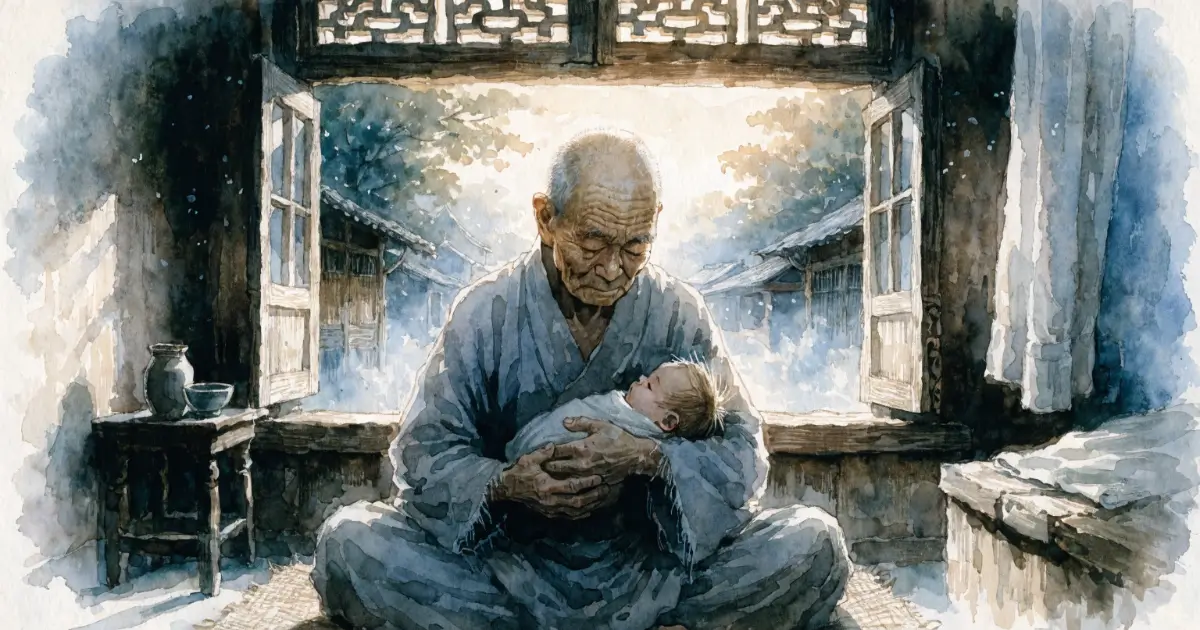
Master Hakuin was a Zen monk known throughout his village for the purity and simplicity of his life. He kept to himself, asked for little, and caused no trouble to anyone.
Then one day, a neighbor’s daughter - an unmarried young woman - was found to be pregnant. Her parents were furious and demanded to know who the father was. At first she refused to say. But pressed again and again, she finally gave them a name.
She said it was Master Hakuin.
Her parents stormed to his door, screaming accusations, demanding he answer for what he had done. The whole village heard about it.
Hakuin listened to every word. Then he said, very quietly: “Oh, is that so?”
After the baby was born, the parents brought the child to Hakuin and left the infant in his care. He accepted without protest.
His reputation was destroyed overnight. People who had respected him now whispered about him. Former supporters looked away when he passed. The accusations followed him everywhere.
Hakuin said nothing to defend himself. He simply went about his days - sourcing milk, finding warm clothes, waking in the night when the baby cried. He cared for the child with the same quiet attention he gave to everything else in his life. No bitterness. No performance of suffering. Just the work in front of him, done well.
A year passed. The young mother’s conscience wore her down until she could carry it no longer.
She went to her parents and told them the truth. The real father was a young man from a neighboring village. She had lied to protect him - and had pointed at the monk because she thought no one would believe he would fight back.
Her parents went pale. They went immediately to Hakuin, bowing deeply, apologizing profusely, begging his forgiveness, and asking to take the child home.
Hakuin handed the baby back to them gently. And he said: “Oh, is that so?”
Five words the first time. Five words the second time. The same five words - but carrying entirely different weight.
The first “Oh, is that so?” absorbed a false accusation without collapsing. It did not deny, did not rage, did not demand fairness. It simply held steady.
The second “Oh, is that so?” received an apology without triumph. It did not say “I told you.” It did not remind anyone of the suffering it had caused. It simply let the moment be what it was.
Neither anger when wronged. Neither pride when vindicated.
That is the whole lesson, right there.
Moral of the Story
A person who cannot be shaken by false blame - or inflated by praise - has found something most people spend their whole lives looking for.
Change Your Angle
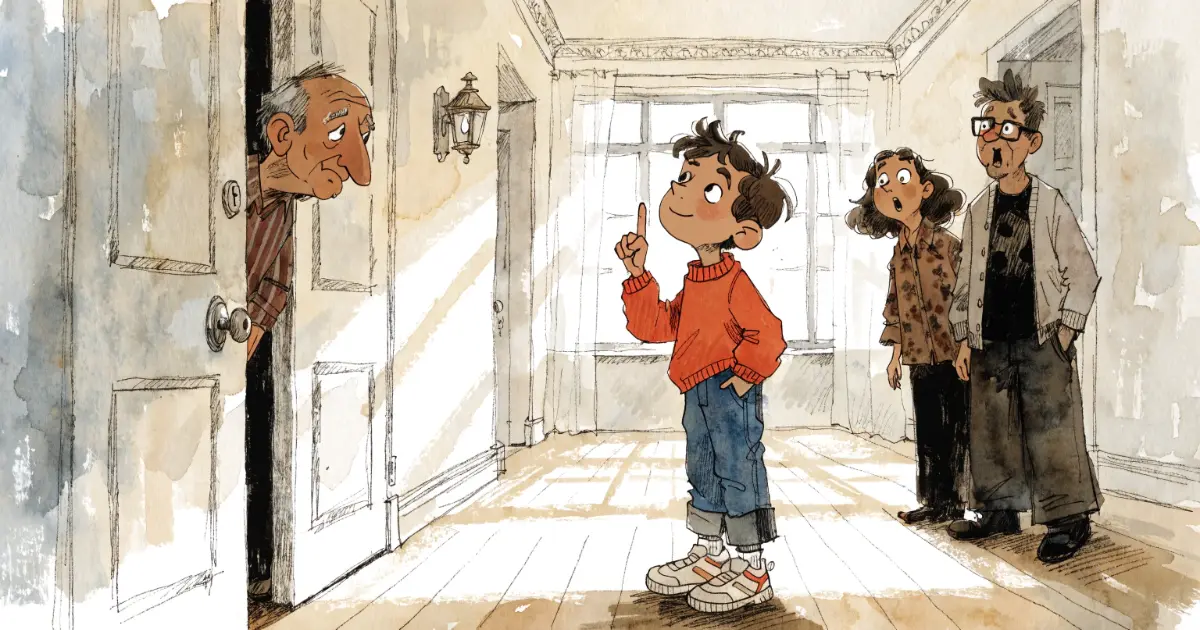
A young couple had spent the whole day searching for a place to rent. They dragged themselves from door to door, exhausted, and nothing quite worked - too small, too dark, too expensive, too far.
Then, late in the afternoon, something changed. They walked into a unit that both of them loved at exactly the same moment. The layout was right. The light was right. The price was right. They were ready to pay the deposit on the spot.
Then the landlord appeared. He was an old man - a fussy, particular sort. And he had one rule.
“I don’t rent to families with children,” he said.
The couple looked at each other. Then they looked down at the small child standing between them.
The husband pointed at the child. “But what do you call this thing standing here?”
Before he could finish, his wife jumped in: “A decoration!”
The husband stared at her. “A decoration? Are you serious? You’re calling our child a decoration so we can rent an apartment?”
The wife covered her face. “I really love this place - and now this little troublemaker has ruined it for us!”
They turned to leave, heads down, the perfect apartment slipping away behind them.
Then they heard it - ding dong.
The little boy had slipped back to the door and pressed the bell.
The old landlord opened it again, eyebrows raised.
The boy looked up at him and said: “Excuse me, sir. I want to rent this apartment.”
The landlord tilted his head. “Rent it? But I told you - I don’t rent to families with children.”
The boy nodded seriously. “I know. But I only have a dad and a mum. I don’t have any children. So you can rent it to me!”
The landlord blinked. Then he smiled slowly.
“…Alright then.”
Moral of the Story
When a door seems closed, a fresh angle can open it. The rule hasn’t changed - but the way you see it has.
There Are Only Three Things in the World
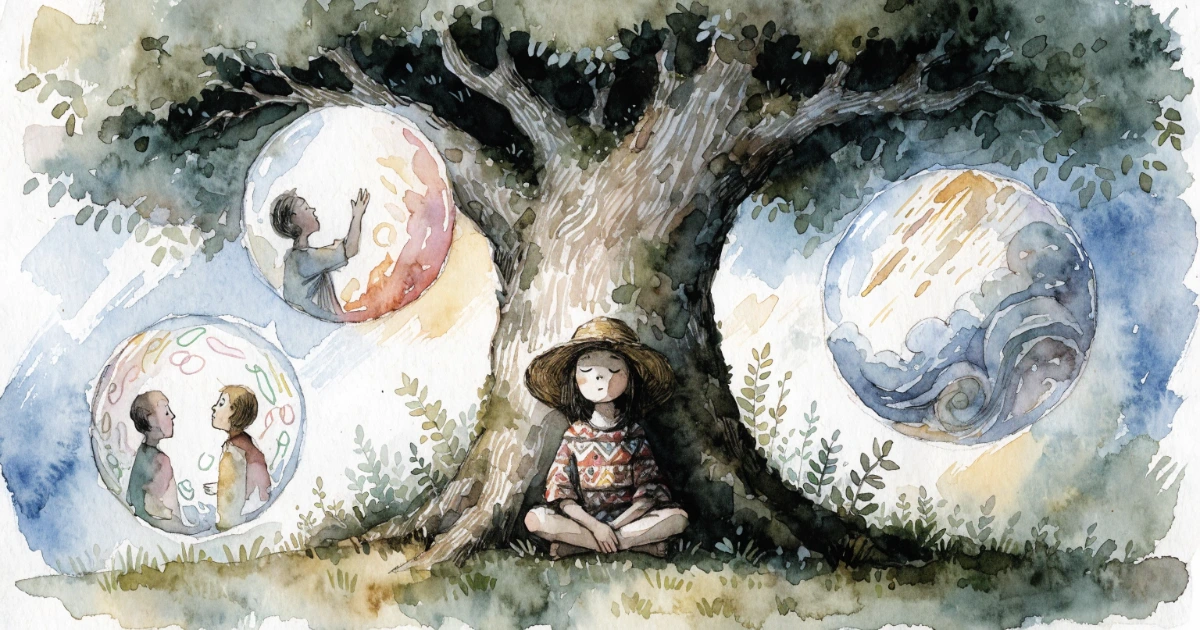
Here is a short idea that sounds almost too simple - but once it clicks, it changes how you look at almost everything.
There are only three kinds of things in the world.
Your own business. Whether you go to work, what you eat, how you feel, whether you get married, whether you help someone - anything you have real control over belongs here.
Other people’s business. Whether a friend is lazy, whether a neighbor’s marriage is happy, whether someone appreciates what you did for them - anything that someone else is driving belongs here. It is theirs, not yours.
Heaven’s business. Whether it rains, whether an earthquake comes, whether a war starts - anything beyond any human’s control belongs here.
That is the whole list. Everything fits into one of these three.
Most unhappiness comes from mixing these up.
We forget about our own business - the choices we actually have the power to make - and leave them unattended. We spend our energy managing other people’s business - judging their choices, trying to change their minds, getting frustrated when they don’t listen. And we lie awake worrying about heaven’s business - the things no person has ever been able to control by worrying harder.
Put plainly: we neglect the one pile we can actually do something about, and exhaust ourselves on the two piles that were never ours to begin with.
The path to feeling lighter is straightforward in theory. Take good care of your own business. Leave other people’s business alone. Stop losing sleep over heaven’s business.
Knowing this is not the same as doing it. The idea is easy to understand and hard to live. Most people nod along and then spend the next hour worrying about something three categories out of their reach.
The practice - the part that actually works - is learning to pause when something is bothering you and ask one quiet question: Whose business is this, really?
If it is yours - take action. If it belongs to someone else - let it be theirs. If it belongs to heaven - let it go.
Moral of the Story
Most of what we worry about was never ours to carry. Take care of your own life, let others live theirs, and trust the rest to take care of itself.
The Blind Monk’s Gift
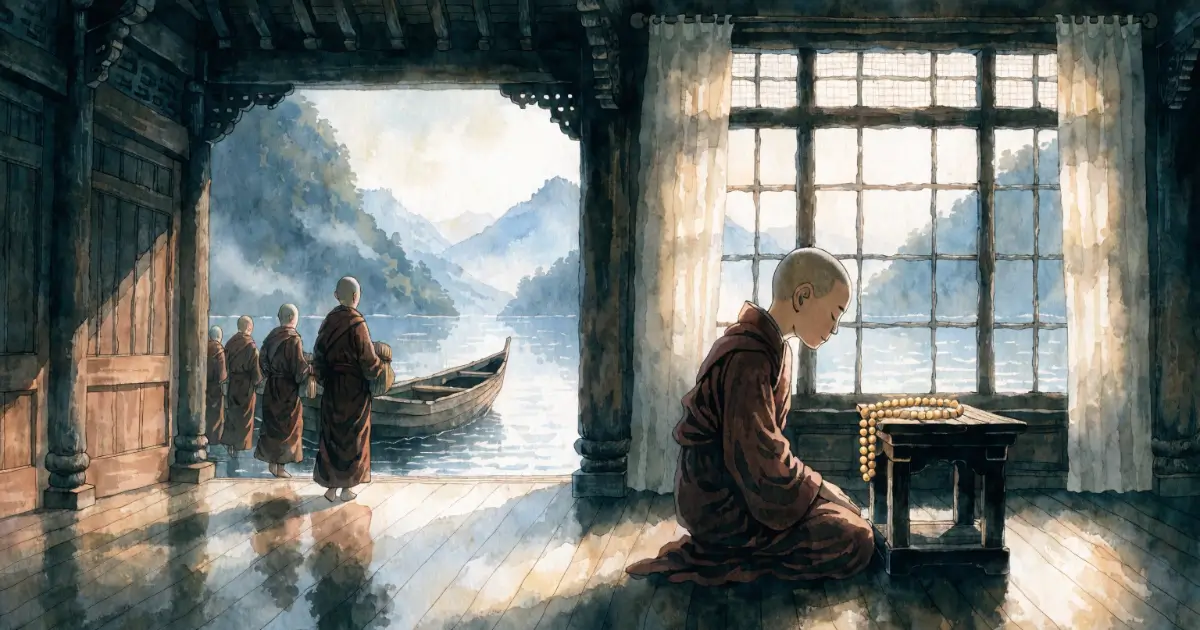
Far out on a vast, still lake stood a small temple, built on a tiny island with no road to reach it. The only way in or out was a single wooden boat that the monks used to fetch supplies. Outsiders couldn’t get near. And inside that temple, locked in the heart of its silence, rested a legendary string of prayer beads - said to have once belonged to a great bodhisattva.
The old master who lived there led a small group of younger monks in their daily practice. They all believed that in such a sacred place, under such a sacred sky, enlightenment couldn’t be far off.
One morning, the old master gathered everyone together with quiet, serious eyes.
“The prayer beads are gone.”
The monks couldn’t believe it. The temple had only one door, and they took turns watching it every hour of every day. Nobody from outside had come in. Nobody could have. And yet - the beads had vanished.
What had been a peaceful community of brothers became something else overnight. Nobody said it out loud, but the thought moved through the air between them like smoke: one of us did this. The monks stopped talking to one another. They stopped meeting each other’s eyes. In a place built on trust, suspicion had moved in and made itself at home.
The old master spoke gently. He told them he wasn’t angry. Whoever had taken the beads - if they could simply admit it, if they could hold the beads with care and love, he would give the necklace to them gladly. All he asked was seven days of quiet reflection.
Day one passed. Nobody stepped forward. Day two. Day three. The silence between the monks grew heavier with each sunrise, until by the seventh day it was almost unbearable.
Nobody came forward.
On the eighth morning, the master told them: “I’m glad none of you confessed. It means the beads could not tempt you. Your practice is solid. You may all go - your time here is complete.”
One by one, the monks shouldered their packs and climbed into the boat to leave. All except one - a blind monk, who stayed kneeling before the altar, chanting quietly, as if nothing had changed.
The others breathed out. They assumed the blind monk was staying because he had taken the beads and could no longer pretend otherwise. The mystery was solved. They left with clear consciences.
After the boat had gone, the master turned to the blind monk and asked: “Why did you stay? Did you take the necklace?”
“The beads may be gone,” the blind monk said, “but the heart that seeks the Buddha is still here. I came to train that heart. I’m not finished.”
“But you didn’t take the beads,” the master said. “Why stay and let everyone believe you did?”
The blind monk was quiet for a moment.
“These past seven days, suspicion wounded everyone - their own hearts, and each other’s. Someone had to hold that weight first, before the wound could begin to heal. If I left, the suspicion would follow us all, invisible, for a long time.”
The master reached into his robe and drew out the legendary prayer beads. He placed them gently around the blind monk’s neck.
“The necklace was never missing. Only one of you learned what it truly means to bear something for others.”
Moral of the Story
The strongest among us are not those who defend their own name - but those willing to carry a burden so that others don’t have to.
There is a quiet truth the blind monk understood that most of us spend years avoiding: suspicion is a double-edged blade. It cuts the person it’s aimed at - and it cuts the one holding it just as deeply. When doubt enters a group of people, it doesn’t stay pointed in one direction. It turns on everyone. The only way to break it is for someone to step forward and absorb it, not because they are guilty, but because they are strong enough to carry it.
In friendships, in families, in any team where people work closely together - there are moments when someone has to go first. Someone has to say “I’ll take this” before the truth is fully clear. That person rarely gets credit right away. They may even be misread as the one to blame. But they are doing something the others haven’t learned yet: putting the health of the group before the safety of their own reputation.
The blind monk also knew something else. He didn’t stay because he was selfless in an empty way - he stayed because he hadn’t finished what he came to do. His purpose was bigger than the drama happening around him. That steadiness, that refusal to be pulled off course by what others thought, is its own kind of wisdom. Innocence doesn’t always need to announce itself. Those who are truly clear on the inside rarely feel the urgent need to prove it to the outside.
The Little River’s Journey
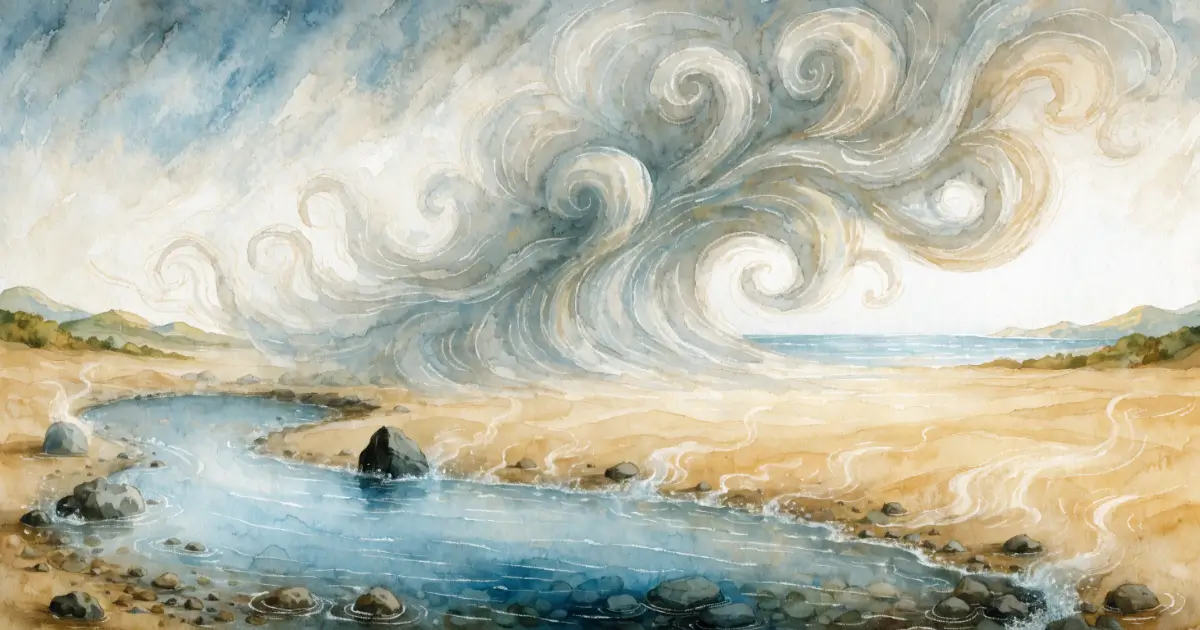
A little river began its life high up in the mountains, far away from everything. It tumbled over rocks, wound through quiet forests, and flowed past village after village. Every time something blocked its path, it pushed through. Every time a boulder stood in its way, it found a route around.
The river was proud of its journey. It had always found a way forward.
Then the river reached the desert.
“I’ve crossed every obstacle so far,” it thought. “This one will be no different.”
But the moment its water touched the dry sand, something terrible happened. The water soaked in and vanished - swallowed whole. The river tried again. And again. Each time, the same result. Its water disappeared into the ground before it could go anywhere.
“Maybe this is just my fate,” the river said quietly. “Maybe I’ll never reach the great sea I’ve heard about.”
A deep, slow voice rumbled all around it.
“If the wind can cross this desert, then so can you.”
The river looked around in surprise. It was the desert speaking.
“That’s easy for the wind,” the river shot back. “The wind flies over you. I can’t do that.”
“You can’t cross as you are right now,” the desert said. “You’re holding too tightly to your current shape. But let the wind carry you - let yourself rise up as vapor - and you’ll make it across. On the other side, the wind will release you, and you’ll fall as rain. Then you’ll become a river again.”
The river went quiet.
Give up its form? Dissolve into the air? It had never done anything like that before.
“But if I disappear into the wind… will I still be me?” the river asked.
“Yes and no,” the desert answered gently. “Your body changes - but what you are at your core never does. You’ve forgotten, but you weren’t always a river. Once, the wind carried you over the mountains as clouds. You fell as snow. You melted and became this very river. That’s who you’ve always been.”
Something stirred deep inside the river. A memory it couldn’t quite name, but somehow recognized.
Slowly - nervously - the river let itself go.
It rose up into the warm desert air, lighter and lighter, until it was nothing but invisible mist caught in the wind’s arms. The wind swept it up, carried it high, and moved it across the wide desert sky.
On the other side, the mist fell as cool, gentle rain. The drops gathered. A stream formed. And the little river flowed on, toward the sea it had always been looking for.
It was the same river. And somehow, it was new.
Moral of the Story
To reach where you truly want to go, you sometimes have to let go of who you currently are - because your real self was never just the shape you were holding onto.
Our lives are often like that little river’s journey. We want to grow, to break through the hard places, to move toward something truer and better. But to do that, we sometimes need something the river needed too - the wisdom and the courage to let go of our own fixed ideas about ourselves.
It helps to stop and ask a few quiet questions: What is my real nature - the part of me that doesn’t change no matter what form I take? What am I gripping so tightly that it’s actually holding me back? And what do I truly want - not just what I’m used to wanting?
Life doesn’t have only one form. When the world around us won’t change, we can try changing ourselves instead. The river was still the river after it crossed the desert as mist. Its core never left. And that’s the quiet courage in this story - knowing that flexibility isn’t weakness, and letting go isn’t loss. As long as your true nature stays with you, you are still you. Sometimes to reach your destination, you just have to be willing to stop looking like yourself for a while.
The Jump

A little river began its life high up in the mountains, far away from everything. It tumbled over rocks, wound through quiet forests, and flowed past village after village. Every time something blocked its path, it pushed through. Every time a boulder stood in its way, it found a route around.
The river was proud of its journey. It had always found a way forward.
Then the river reached the desert.
“I’ve crossed every obstacle so far,” it thought. “This one will be no different.”
But the moment its water touched the dry sand, something terrible happened. The water soaked in and vanished - swallowed whole. The river tried again. And again. Each time, the same result. Its water disappeared into the ground before it could go anywhere.
“Maybe this is just my fate,” the river said quietly. “Maybe I’ll never reach the great sea I’ve heard about.”
A deep, slow voice rumbled all around it.
“If the wind can cross this desert, then so can you.”
The river looked around in surprise. It was the desert speaking.
“That’s easy for the wind,” the river shot back. “The wind flies over you. I can’t do that.”
“You can’t cross as you are right now,” the desert said. “You’re holding too tightly to your current shape. But let the wind carry you - let yourself rise up as vapor - and you’ll make it across. On the other side, the wind will release you, and you’ll fall as rain. Then you’ll become a river again.”
The river went quiet.
Give up its form? Dissolve into the air? It had never done anything like that before.
“But if I disappear into the wind… will I still be me?” the river asked.
“Yes and no,” the desert answered gently. “Your body changes - but what you are at your core never does. You’ve forgotten, but you weren’t always a river. Once, the wind carried you over the mountains as clouds. You fell as snow. You melted and became this very river. That’s who you’ve always been.”
Something stirred deep inside the river. A memory it couldn’t quite name, but somehow recognized.
Slowly - nervously - the river let itself go.
It rose up into the warm desert air, lighter and lighter, until it was nothing but invisible mist caught in the wind’s arms. The wind swept it up, carried it high, and moved it across the wide desert sky.
On the other side, the mist fell as cool, gentle rain. The drops gathered. A stream formed. And the little river flowed on, toward the sea it had always been looking for.
It was the same river. And somehow, it was new.
—I jumped from the 11th floor.
As I fell, I could see the windows of every floor.
10th Floor: I saw Peter, who had just lost his job, sitting alone in despair.
9th Floor: I saw Rose arguing fiercely with her boyfriend.
8th Floor: I saw Lily discovering that her partner had betrayed her.
7th Floor: I saw Dan suffering from depression and taking medication.
6th Floor: An employee was still working late at night, exhausted from pressure.
5th Floor: A man looked overwhelmed by family and life responsibilities.
4th Floor: A woman who had just broken up with her boyfriend was crying while holding her friend’s hand.
3rd Floor: An elderly man lived alone with no one caring about him.
2nd Floor: After her divorce, Lily was looking at her old wedding photos and crying.
Before jumping, I always believed:
“I am the most unfortunate person in the world.”
But as I fell past those windows and saw their lives, I suddenly understood something.
Everyone carries their own pain.
At that moment I realized:
Maybe my life was not as terrible as I thought.
The people I just saw are now standing at their windows, looking down at me.
And perhaps they are thinking:
“Looking at the person who just jumped…
maybe my life is not the worst after all.”
Moral of the Story
Every family has its own struggles.
In life, eight or nine out of ten things may not go the way we hope.
A pessimistic person focuses on those eight or nine disappointments.
But an optimistic person learns to appreciate the one or two moments of happiness that still remain.
Hold Your Own Value
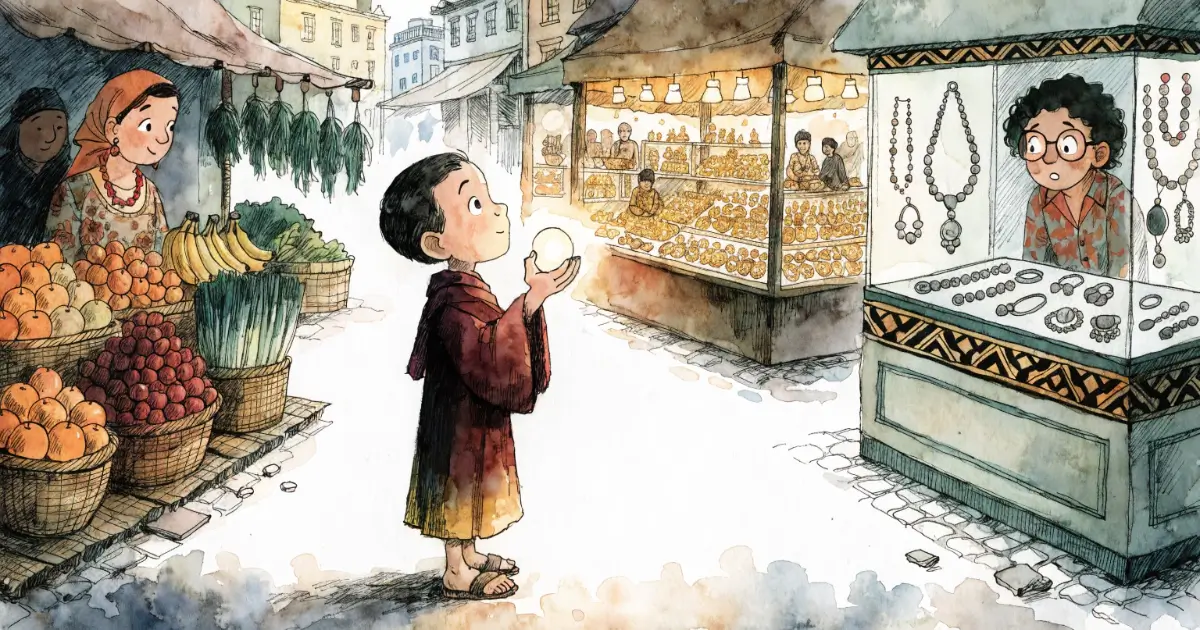
A young student had been following his master for a long time. He was eager, curious, and a little impatient. Every single day, he asked the same question: “Master, what is the true value of a human life?”
The master smiled, said nothing, and went about his day. The student asked again the next morning. And the morning after that. He asked until the master had heard the question so many times that he finally decided it was time to answer - just not with words.
One day the master reached into his room and pulled out an ordinary-looking stone. It was smooth and large, nothing particularly special about it.
“Take this stone to the market,” the master said. “Don’t sell it. Just see what people offer you for it.”
The student headed to the market, holding the stone out for anyone to see. Some people poked at it and said it was a nice size, good to look at - they’d give two coins for it. Another man said it would make a fine counterweight for a scale - he’d pay ten. The offers went back and forth, but ten coins was as high as anyone would go.
The student ran back, almost giddy. “Master! A useless stone - and someone offered ten coins for it! We should sell it while we can!”
The master shook his head. “Don’t sell it yet. Now take it to the gold market.”
The student wasn’t sure what to expect, but he went. At the gold market, the first person who looked at the stone offered a thousand coins. Before he could catch his breath, the next person said ten thousand. By the time he left, someone had offered a hundred thousand.
He sprinted home, barely able to speak. The master listened calmly and then said, “Good. Now take it to the finest jewellery shop in the city - and ask the master jeweller what it’s worth.”
At the jewellery shop, the jeweller turned the stone over slowly in his hands. His eyes went quiet and careful.
He opened with a hundred thousand. The student didn’t speak. Two hundred thousand. Three hundred thousand. The jeweller kept going, his voice steady, until he finally looked up - almost annoyed - and told the student to just name his price.
“I’m sorry,” the student said, “my master won’t let me sell it.” And he walked home with the stone still in his hands.
When the student told the master what had happened, the master sat down and spoke.
“Do you see it now? I couldn’t answer your question before - because you were looking at life the way the market looks at a stone. The people in the street saw something cheap. The traders in the gold market saw something valuable. But the master jeweller - he saw something beyond price.”
He looked at the student carefully.
“The value of your life is not set by what the people around you are willing to pay. It is set by the eyes you use to look at yourself. If you see yourself the way the market does, you’ll be worth two coins. But if you carry inside you the eyes of a master jeweller - you’ll find that your real value has no ceiling at all.”
Moral of the Story
Our worth is not decided by what others are willing to offer - it is decided by the price we set for ourselves.
Each of us starts out a little like that stone - waiting to be picked up and valued. The people around us set prices on us constantly, and it’s easy to start believing those numbers. A stranger on the street might see very little. A good friend sees something golden. But our parents - if we’re lucky - see something beyond all measuring. That’s what a mother or father does: they hold you like a priceless jewel even when the rest of the world hasn’t figured it out yet.
The question worth sitting with is: where do you price yourself? Some people settle early - “I’ll just be a small iron bar, that’s enough.” Others hold out. They believe they’re steel, and they put themselves through the grinding and the heat until they prove it. Both choices are real, and both have consequences.
Sharing Porridge
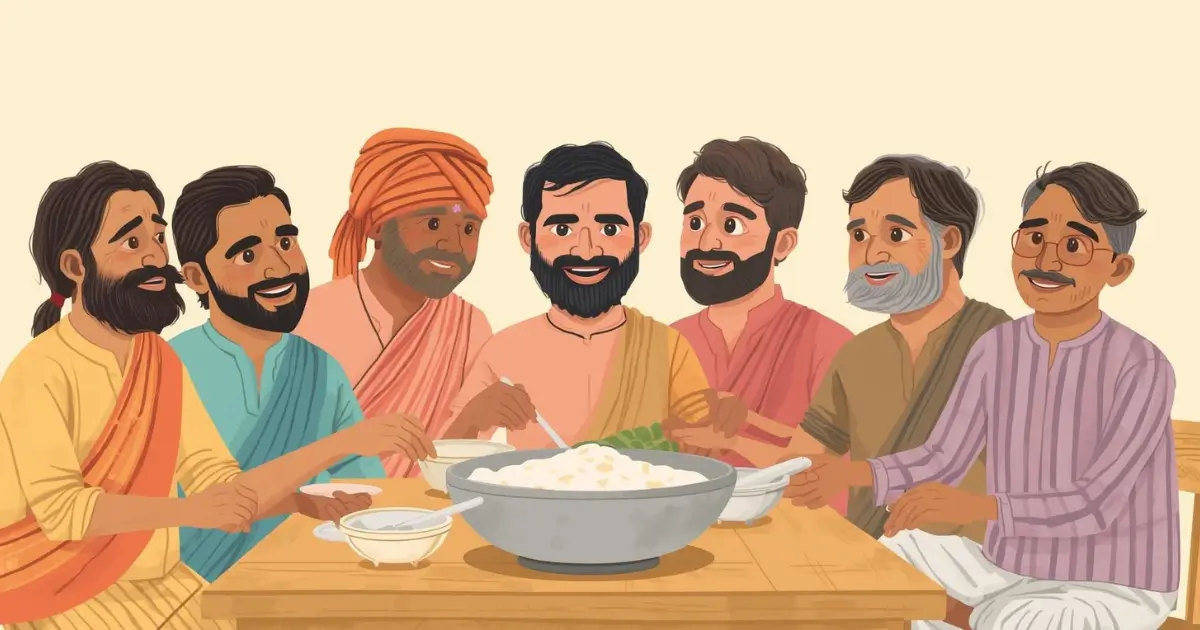
Once, there were seven people living together in a small place. Every day, they had only one pot of porridge to share among them.
The problem was simple but serious: there was never enough food for everyone.
At first, they decided to draw lots to choose who would divide the porridge each day. Each person would take turns.
However, after some time, they noticed a pattern. The person responsible for dividing the porridge would always give themselves the largest portion. As a result, each person only had one full meal per week, and that was on the day they were in charge.
This created dissatisfaction and quiet resentment.
To solve the issue, they came up with a new idea. They chose one person who was considered the most moral and trustworthy to divide the porridge every day.
At first, it seemed like a good solution.
But soon, problems began to appear again.
People started trying to please that person, offering favors and even small bribes, hoping to receive a larger portion. The once peaceful group became filled with tension, jealousy, and hidden competition.
The environment turned toxic.
Still not satisfied, they tried another approach. They formed a three-person porridge committee and a four-person evaluation committee.
This sounded fair in theory.
But in reality, it only made things worse.
The committees argued constantly. They disagreed, blamed each other, and wasted time. By the time they finished discussing and dividing the porridge, it was already cold.
No one was happy.
Finally, they came up with a simple but powerful rule:
They would still take turns dividing the porridge. However, the person who divided it would be the last to choose a bowl.
This changed everything.
Now, the person dividing the porridge had a strong reason to be fair. If they gave themselves too little, they would suffer. If they divided it unevenly, they might end up with the smallest portion.
So naturally, everyone tried their best to divide the porridge as equally as possible.
Even if there were small differences, no one complained.
Peace returned. The group became harmonious, and their days grew better and happier.
This is one of those ethical stories that teaches a powerful lesson about fairness and responsibility.
The same seven people, the same amount of food, but different systems led to completely different outcomes.
Moral of the Story
A fair system creates harmony, while an unfair system creates conflict.
From this story, we learn:
- Systems matter more than intentions
- Fairness builds trust
- Responsibility must be structured, not assumed
Why Cool Bedtime Stories Work
Moral stories help simplify complex life lessons into relatable situations. These short moral stories for adults provide quick insights that can guide better decisions and encourage personal growth.
Reflection Questions
- What lesson stood out the most?
- Did the story change your perspective?
- How can you apply it in your life?
- What would you do differently?