Relaxing Cool Bedtime Stories for Adults Easy to Read
Explore cool bedtime stories for adults-calm, intriguing, and easy to read stories that help you relax, unwind, and end your day on a thoughtful note.

Looking for cool bedtime stories for adults that feel a bit different? This collection brings together calm, stylish, and slightly intriguing stories designed to help you unwind before sleep.
These stories are not just relaxing-they carry a modern, thoughtful tone that keeps your mind gently engaged while still allowing you to relax.
If you want to explore more, you can discover more nighttime reading options
Story 1 - The Painting Called Thief
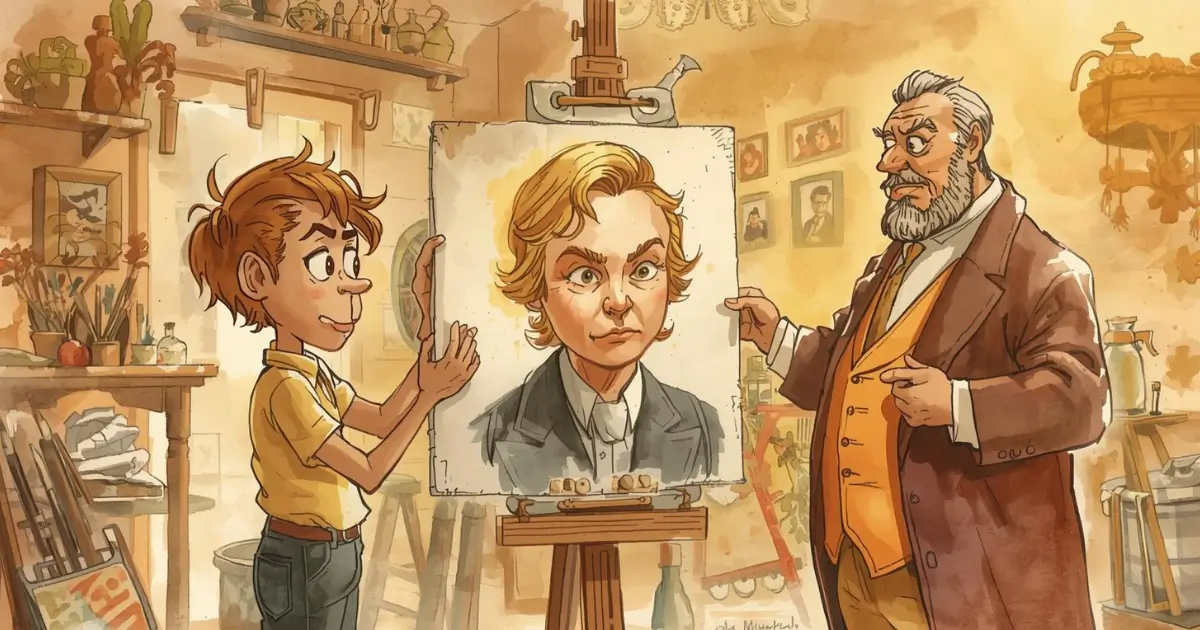
A young painter lived in a small, cramped house. He had no fame, no fortune - just his brushes and his talent. He painted portraits to earn a living, taking each commission seriously, no matter how small.
One day, a wealthy man passed by, noticed the painter’s fine work, and made him an offer. He wanted a portrait painted of himself, and they agreed on a price of ten thousand dollars. The painter got to work.
A week later, the portrait was finished. The rich man came to collect it - but brought something else with him too.
When the rich man saw the completed painting, he smiled. Then he did the math a different way.
He thought to himself: “The person in this portrait is me. If I don’t buy it, nobody else will. Why should I pay the full price?”
So he offered three thousand instead of ten. The young painter was stunned. He had never faced anything like this. He argued, reasoned, and pleaded - asking the man to honor his word and act with integrity.
The rich man just shrugged. “Three thousand. Take it or leave it.”
The young painter took a breath and chose his answer.
“I won’t sell. Not for that price. You broke your word today, and one day you will pay twenty times what you owe me.”
The rich man laughed out loud. “Twenty times? That’s two hundred thousand! You must be out of your mind.”
“We’ll see,” the painter said quietly, as the man walked away.
That humiliation became fuel.
The painter left that place, found a new teacher, and threw himself into his craft. He worked harder than he ever had before - early mornings, late nights, one canvas after another. He failed often. He kept going anyway.
More than a decade passed. And then, slowly, the art world began to notice his name.
One afternoon, several of the rich man’s friends came to him with curious news.
“We went to an exhibition by a famous artist,” they said. “There’s a portrait there that looks exactly like you. It’s priced at two hundred thousand - not negotiable. And the title of the painting?” They paused. “It’s called The Thief.”
The rich man felt the blood drain from his face.
He remembered. The young painter. The broken deal. The promise made in anger.
That night, he went to find the artist. He apologized. And he paid two hundred thousand dollars to take the portrait home.
The young painter’s name was Pablo Picasso.
Moral of the Story
No obstacle is worth giving up your whole journey - step over the stone in front of you, and the road ahead may surprise you.
Why This Lesson Matters More Than Ever
Life has a way of putting difficult people in our path. Sometimes it’s someone who takes advantage of us. Sometimes it’s a setback that feels deeply unfair. In those moments, it’s easy to give up - to decide the destination isn’t worth the trouble.
This is one of those moral stories for kids and adults that reminds us: the people who treat us poorly don’t get to decide how our story ends. Picasso didn’t let one dishonest man define his future. He turned the hurt into hard work.
These kinds of life lessons stories matter because they speak to something real. Humiliation stings. Injustice makes us want to quit. But giving up hands the victory to the wrong person. Character stories like this one show children and parents alike that patience, effort, and dignity are always worth more than a quick win.
The stone in your way is not the end of the road. It’s just a stone.
Story 2 - Professional Communication
There is an old saying that has always struck me as quietly profound:
“The more mature the wheat, the more it bends.”
The fuller the grain, the lower the stalk. And the more a person truly knows, the less they feel the need to stand tall about it.
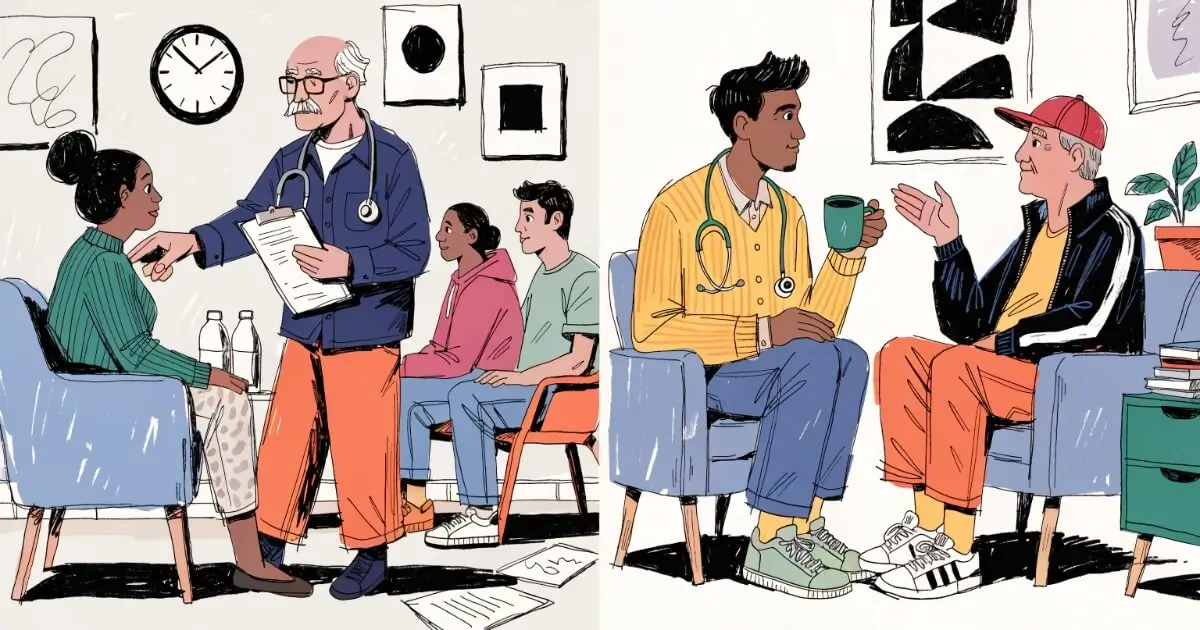
There was once a senior doctor whose reputation had been built over a lifetime.
His skills were exceptional - the kind that other doctors traveled to observe, and that patients spoke about in the way people speak about someone who has genuinely helped them. Eventually, he took on a young doctor as his apprentice, and together they ran a clinic that grew busier with each passing month.
To manage the growing number of patients, they divided the work simply and sensibly. Minor cases went to the young doctor. The serious ones were kept for the senior.
For a while, this arrangement seemed to work well.
Then something unexpected began to happen.
Patients with serious illnesses started requesting the young doctor.
Not the senior one - the young one, the less experienced one, the apprentice.
The senior doctor noticed. He was puzzled, then quietly unsettled. He had given his career to this work. He had diagnosed conditions in minutes that others might have missed entirely. Why were patients turning away from him?
He began to observe.
The young doctor’s waiting area was always full, which helped - a busy doctor feels like a trusted doctor, and that impression spreads. But that was not the real reason.
The real reason was something simpler and more human.
Because the young doctor knew the limits of his experience, he was careful. He sat with patients. He asked questions - thorough ones, unhurried ones. He listened to what they said and also to what they seemed to be carrying beneath the words. And when the consultation was ending, he would often add something like:
“Try not to worry. Drink plenty of water, rest well, and you’ll be feeling better soon.”
Small words. But people remembered them.
The senior doctor, meanwhile, moved differently. Years of practice had given him a kind of clinical fluency - he could read a patient’s condition almost immediately, ask what needed to be asked, and arrive at a conclusion that was almost always correct.
But that efficiency, seen from the other side of the desk, could look like indifference.
Patients left his consultations with an accurate diagnosis and a slight sense that they hadn’t quite been seen.
When this was gently explained to him, the senior doctor went quiet.
He was not a man who lacked confidence. But in that moment, something shifted.
He had spent so many years mastering what to know that he had slowly stopped thinking about how to give it. His expertise had grown so fluent it had become invisible to the very people it was meant to serve.
Moral of the Story
Competence opens the door.
But it is the willingness to slow down, to be present, to speak to someone as a person rather than a problem to be solved - that is what makes people walk through it.
The senior doctor was not a worse doctor than his apprentice. In nearly every clinical sense, he was a far better one.
But skill, when it loses its patience, can start to feel like dismissal. And people who feel dismissed will walk toward whoever makes them feel otherwise.
True mastery is not just knowing the answer. It is knowing how to offer it in a way the other person can actually receive.
Why This Lesson Matters More Than Ever
The world has become very good at measuring expertise - credentials, years of experience, results on paper.
What it measures less well is the quality of presence a person brings to their work.
Whether in medicine, in leadership, in teaching, or in any relationship that asks something of both people - the ability to listen without hurrying, to explain without condescending, to make someone feel genuinely considered - is not a soft skill.
It is the skill that determines whether everything else you know actually lands.
The wheat bends because it is full.
And the fullest professionals are often the ones most willing to sit down, slow down, and remember that the person across from them is not just a case to be solved - but a human being hoping to be understood.
Story 3 - The Value of Life
There once was a beggar who had lost his right arm.
His appearance told a story of hardship that was difficult to look at, and almost everyone who passed him gave something - a few coins, a note, whatever they had in their pockets. Pity came easily. It always does.
One day he arrived at a farmhouse and knocked, asking for food.
The woman who answered looked at him for a moment, then said:
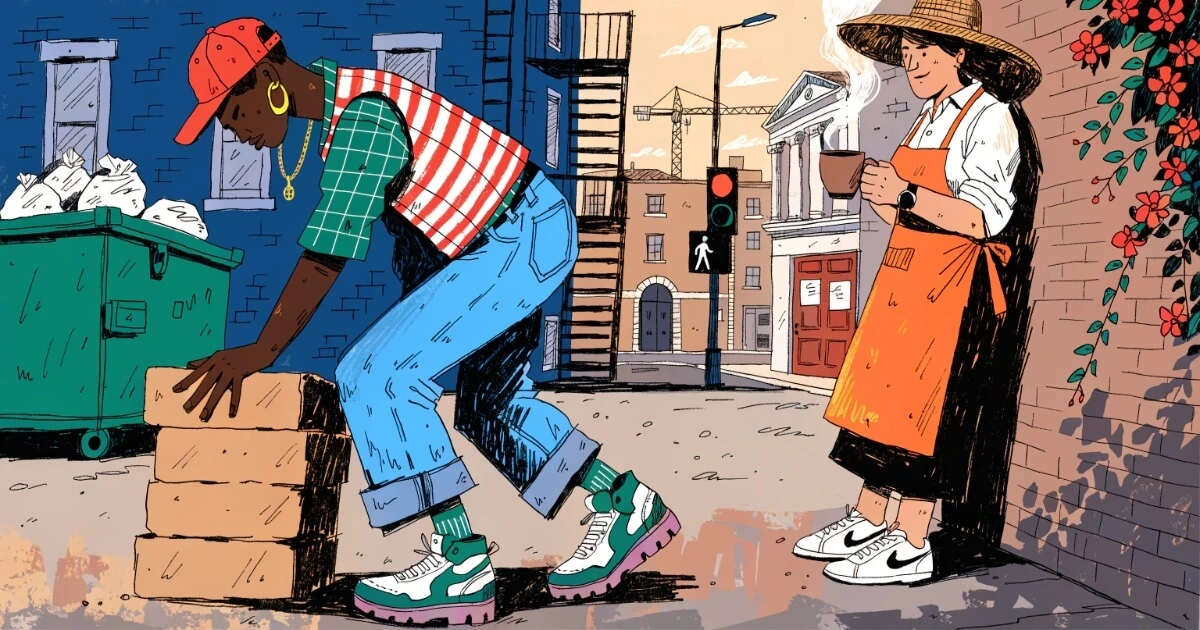
“There is a pile of bricks at the front of the house. Move them to the backyard, and I will pay you for the work.”
The beggar’s expression changed.
“You can see I only have one arm. How can you ask me to move bricks? Are you mocking me?”
The woman said nothing.
She stepped past him, crouched down beside the pile, and picked up a single brick with one hand. She carried it around to the backyard, set it down, and walked back.
Then she looked at him and said, quietly:
“If I can do it with one hand, why can’t you?”
He had no answer for that.
Reluctantly - and then, as the minutes passed, with something less reluctant - the beggar began to work.
He moved slowly at first, learning the awkward rhythm of it, figuring out how to balance and carry with a body that had learned to compensate for what it had lost. The sun moved across the sky. Sweat soaked through his shirt and ran down his face.
Two hours later, the last brick was in the backyard.
The woman came out and handed him a clean white towel.
He pressed it to his face and neck. When he pulled it away, the towel was completely black.
She placed twenty dollars in his hand.
He thanked her again and again.
She shook her head.
“You don’t need to thank me. That is the money you earned with your own hands. Your own sweat.”
He looked down at the money for a long moment.
“I will never forget you,” he said. “Please - let me keep this towel. I want something to remember this day by.”
Many years passed.
Then one afternoon, a man in a well-cut suit came to the same farmhouse and knocked on the door.
The woman who answered was older now. She did not recognize him at first.
He said:
“I used to come to this door as a beggar. I am now the chairman of a company.”
He paused, gathering himself.
“That afternoon - the bricks, the towel, the twenty dollars - you gave me something I had lost so completely I had stopped knowing it was gone. You gave me back the sense that I could do something. That I was worth something. Without that day, I think I would still be wandering.”
The elderly woman smiled, but shook her head gently.
“It wasn’t me. You moved the bricks. You did it yourself.”
The man wanted to give her a building - an entire property - as a gift.
She refused, warmly but without hesitation.
“We have two hands in this family,” she said, still smiling. “We will earn what we need.”
Moral of the Story
The woman did not give the beggar food.
She gave him something much harder to offer and much harder to receive - the experience of doing something difficult, finishing it, and being paid not out of pity but out of honest exchange.
Charity can sustain a person. But dignity sustains a life.
The towel turned black because he had truly worked. That was the point. That was the gift.
Why This Lesson Matters More Than Ever
It is natural to want to help by giving - to hand someone what they need and feel that the problem has been addressed. And sometimes that is exactly right.
But there are moments when the most generous thing is not to give, but to ask something of the other person. To expect something from them. To treat them, in other words, as someone who is still capable.
That expectation - offered without cruelty, without condescension, but with quiet and steady belief - can reach a person in a way that charity never quite does.
It says: I see what you are still able to do.
And sometimes, that is the only thing a person needs to hear to begin the long walk back to themselves.
Story 4 - The Donkey in the Well
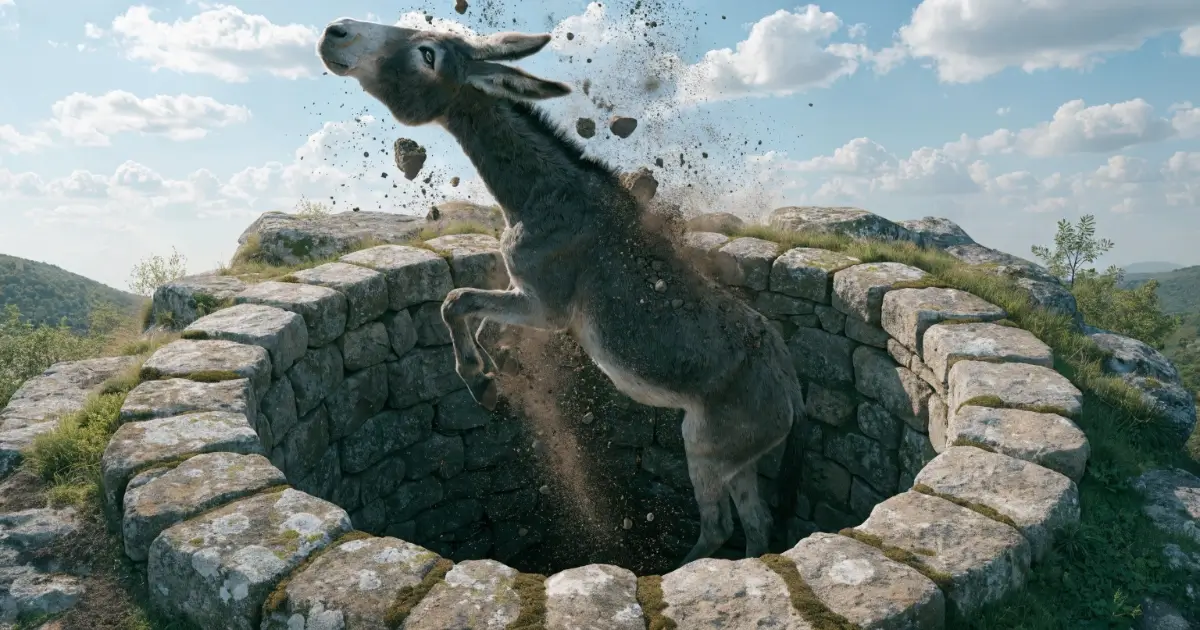
One day, a farmer’s donkey accidentally fell into a dry well.
The farmer tried many ways to rescue the donkey. Hours passed, and the donkey continued to cry helplessly from the bottom of the well.
Finally, the farmer decided to give up.
He thought the donkey was already old and not worth the effort of rescuing. However, the well still needed to be filled.
So he asked his neighbors to help shovel dirt into the well. This way the well would be filled and the donkey’s suffering would end quickly.
The neighbors each took a shovel and began throwing dirt into the well.
At first, the donkey cried loudly when it realized what was happening.
But after a while, something surprising happened.
The donkey suddenly became quiet.
Curious, the farmer looked down into the well and was shocked by what he saw.
Every time a shovel of dirt landed on the donkey’s back, the donkey would shake it off and step up onto the pile of dirt.
Again and again, the donkey shook off the dirt and stepped higher.
Soon the donkey rose higher and higher in the well.
Finally, it reached the edge of the well and jumped out, running away while everyone looked on in astonishment.
Like the donkey, we may sometimes fall into the “dry wells” of life.
Many kinds of “dirt” - problems, setbacks, and difficulties - may be thrown onto us.
The secret to escaping those wells is simple:
Shake the dirt off and step on it.
In fact, the challenges we face in life are like the dirt thrown onto the donkey.
If we look at them from another perspective, they can become stepping stones that help us rise higher.
As long as we keep shaking off the difficulties and standing on them, we can eventually climb out of even the deepest well.
At first, the dirt being thrown into the well looked like it would bury the donkey alive.
But because of the donkey’s attitude toward adversity, it actually helped the donkey escape.
This is one of the key factors that can change a person’s destiny.
When we face difficulties with calmness and determination, the power that helps us often hides within the adversity itself.
Ultimately, everything depends on ourselves.
We must learn to let go of gains and losses and move forward bravely toward our dreams.
Moral of the Story
Obstacles in life can either bury us or help us rise.
The difference lies in how we respond to them.
Why This Still Matters Today
In modern life, people constantly face pressure, failure, and unexpected challenges.
This story reminds us that difficulties are not always obstacles; sometimes they are the very steps that lift us higher.
With resilience and determination, we can turn adversity into opportunity.
Story 5 - The Carrot, Egg, and Coffee
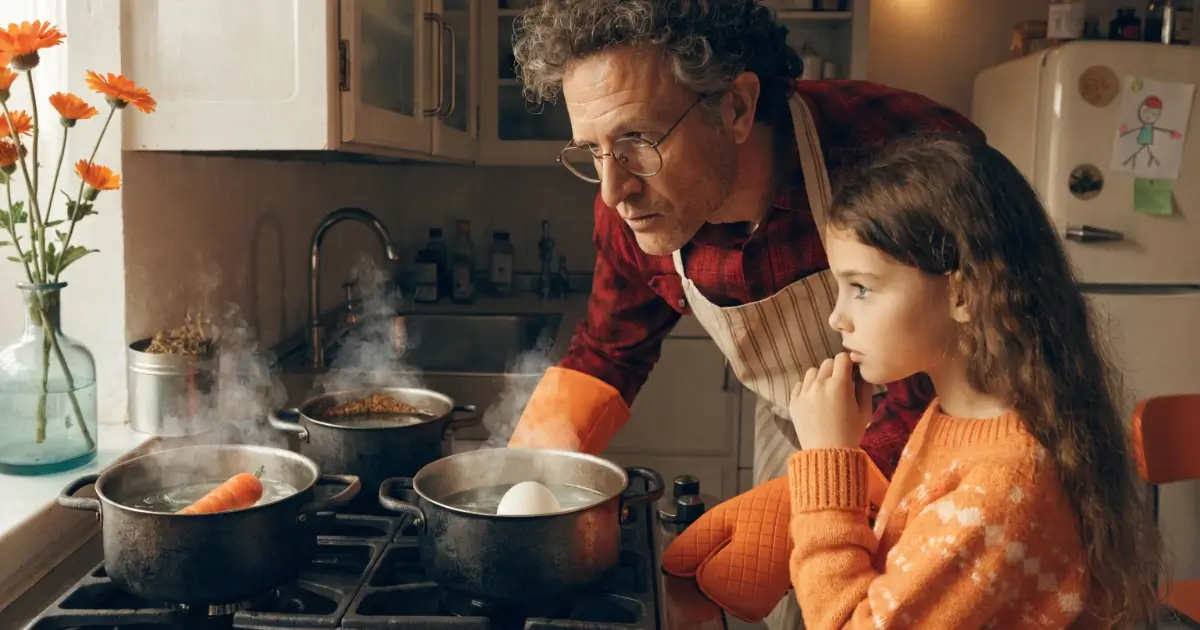
A daughter complained to her wise father about how difficult and painful her life had become.
She felt helpless and lost. She wanted to keep moving forward in life, but she no longer knew which direction to take.
Problems kept appearing one after another, leaving her exhausted from fighting and struggling. She was ready to give up.
Her father, who worked as a chef, quietly took her hand and led her into the kitchen.
He filled three pots with water and placed them on the stove.
When the water began to boil, he put a carrot into the first pot, an egg into the second pot, and ground coffee beans into the third.
The daughter looked at him with confusion.
The father gently held her hand and signaled her to stay quiet and simply watch the boiling water.
After some time, he removed the carrot and the egg and placed them in separate bowls. Then he poured the coffee into a cup.
“What do you see?” he asked.
“Carrot, egg, and coffee,” the daughter replied.
The father asked her to touch the carrot.
It had become soft and weak.
Then he asked her to crack the egg.
Inside, the once fragile liquid had become firm and hard.
Finally, he asked her to taste the coffee.
She smiled as she smelled the rich aroma and tasted the warm drink.
The father explained that all three had faced the same adversity - boiling water - but reacted differently.
The carrot was originally strong and firm, but after being placed in boiling water it became soft and weak.
The egg was fragile at first, protected only by a thin shell. But after facing the boiling water, the inside became hard.
The coffee was unique.
Instead of being changed by the water, it transformed the water itself and created something new and flavorful.
The father gently placed his hand on his daughter’s head and asked:
“When adversity knocks on your door, how will you respond?”
“Will you be like the carrot, appearing strong but becoming weak when hardship arrives?”
“Or will you be like the egg, once soft but becoming hardened and bitter after suffering loss and difficulty?”
“Or will you be like coffee, transforming the situation and making the world around you better?”
Moral of the Story
Adversity reveals who we truly are.
Some people become weaker.
Some become hardened.
But the strongest people transform adversity into something meaningful.
Story 6 - The Line Between Strengths and Weaknesses
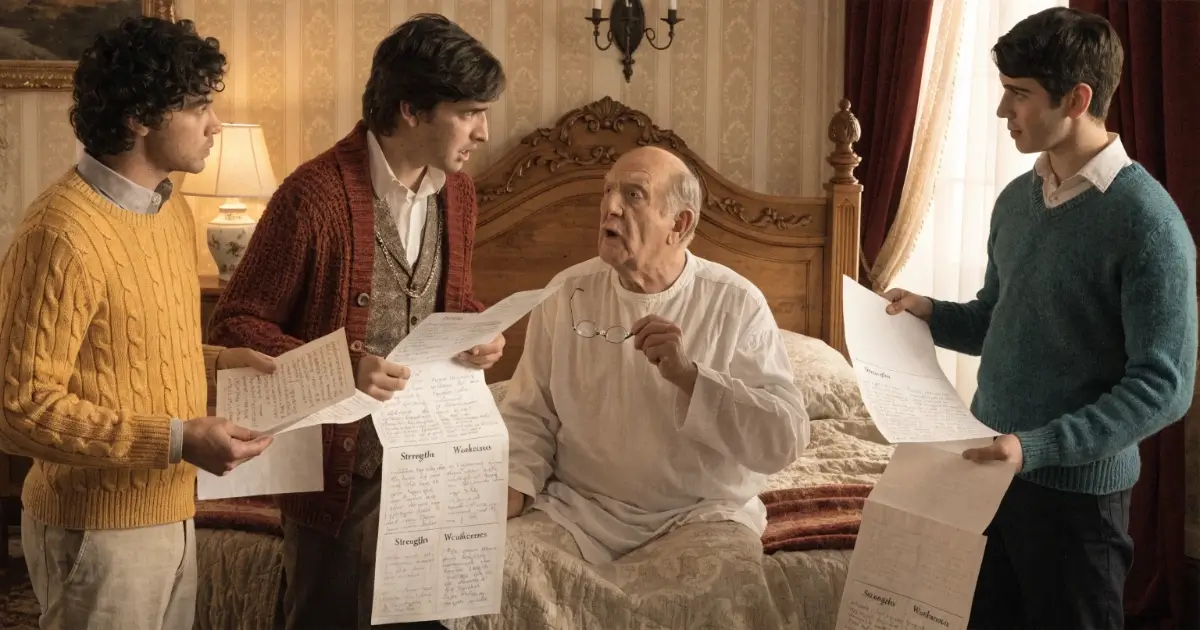
An old wealthy man, nearing the end of his life, wanted to divide his fortune among his three sons.
However, he wished to give the largest share to the son whose character and behavior were the most mature.
So he came up with a test.
He called his three sons to his bedside and said:
“I want to decide how to divide my inheritance, but I am unsure how to do it fairly.
Each of you should take two sheets of paper.
On one sheet, write down your own strengths.
On the other sheet, write down the weaknesses of the other two brothers.
Then ask the other brothers to sign the papers to confirm them.
Whoever writes the most and finishes the task the fastest will receive the largest portion of the inheritance.”
The three brothers quickly followed the instructions and agreed to reveal the results the next morning.
Early the next morning, the three brothers gathered outside their father’s room.
The eldest and the second brother were still arguing about whether they should sign each other’s papers.
Meanwhile, the youngest brother sat calmly nearby.
The father asked him how things were going.
The youngest son replied that both of his brothers had already signed his papers.
The father was surprised and asked how he managed to do it so quickly.
The youngest son explained:
“My paper listing my strengths was blank.
The paper listing my brothers’ weaknesses was also blank.
I believe that I have no particular strengths and that my brothers have no weaknesses.
Because of that, it was easy for them to agree and sign.”
The father then asked the other two brothers to show their lists.
After looking at them, he smiled.
The number of strengths they wrote about themselves was exactly the same as the number of weaknesses they wrote about each other.
Interestingly, the qualities the eldest brother considered his strengths were seen as weaknesses by the second brother.
Likewise, the second brother’s strengths were listed as weaknesses by the eldest brother.
Their perspectives were completely opposite.
When the two brothers continued arguing, the father asked the youngest son if he had a suggestion.
The youngest son said:
“I think they should sign the papers listing their own weaknesses first.
When you acknowledge your own weaknesses, others will find it easier to recognize your strengths.”
The two brothers followed his advice.
Soon both papers were signed happily.
The father then compared the lists.
He noticed that the signatures on the youngest son’s papers were only one minute apart.
However, the signatures on the older brothers’ papers were more than twenty-four hours apart.
Finally, the father gave each son an envelope.
Inside was a note that said:
“It is actually very simple to make others accept your reasoning.
First acknowledge that you have weaknesses, and only then will your strengths have room to grow.
It is also simple to make others accept you.
First understand the feelings of others, instead of protecting your own feelings first.”
In truth, the line between strengths and weaknesses does not lie within ourselves.
It lies in the hearts of others.
Moral of the Story
The boundary between strengths and weaknesses is often shaped by perspective.
When we acknowledge our own flaws with humility, others are more willing to recognize our strengths.
True maturity begins with self awareness.
Why This Story Still Matters Today
In modern society, people often try to defend their strengths while hiding their weaknesses.
However, humility and self reflection create stronger relationships and deeper trust.
This story reminds us that growth begins when we are willing to understand ourselves and empathize with others.
Why Cool Bedtime Stories Work
Sometimes, a slightly intriguing or modern story style helps your mind slow down in a different way. These cool bedtime stories for adults balance relaxation with light curiosity-perfect for easing into sleep without feeling bored.
Reflection Questions
- Did the story keep your interest without overstimulation?
- What feeling stayed with you the most?
- Did it help you slow your thoughts?
- Would you read more stories like this?
Explore More Bedtime Stories
→ Browse all bedtime stories in one place
→ Explore extended bedtime reads