The Last Lesson: A Moral Story from Prison
A moving true story about a teacher who gives a final lesson in prison and later receives a heartbreaking letter from a former student facing execution.
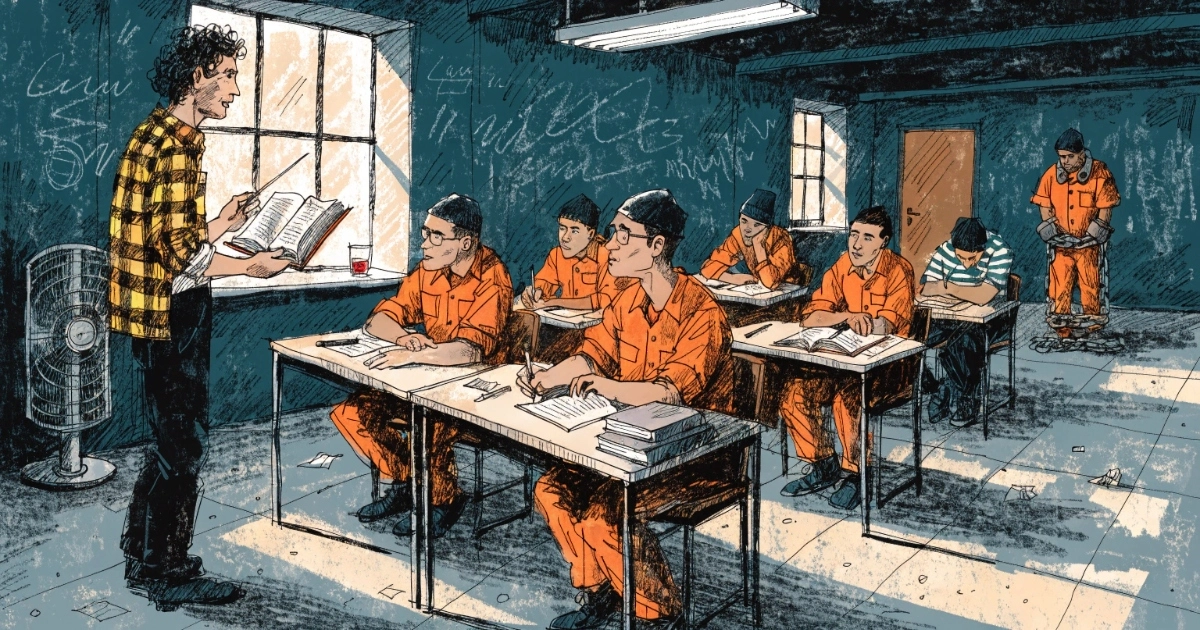
Teaching Inside a Prison
I often give lectures inside prisons, where I have many opportunities to communicate directly with inmates.
One day, the prison administration suddenly informed me that a group of inmates would soon be released. They hoped I could give them one final lecture the next morning, offering advice and encouragement before they returned to society.
As I stood at the podium drinking tea brought by an inmate, I suddenly heard a commotion outside the classroom.
Two armed guards escorted a prisoner in his forties into the room.
He was a dangerous criminal.
His legs were shackled, his hands were handcuffed, and he held a heavy iron ball — the strictest security measure used in prison to prevent escape.
The prisoner stood straight, bowed deeply to me, and slowly walked to the back of the classroom before sitting down on a bench.
The guards stood on both sides with serious expressions.
In more than two years of teaching in prison, I had never seen such a situation before.
Clearly, this prisoner had received special permission to attend my lecture.
Changing My Lecture
Perhaps it was the weathered expression on his face — the look of someone who had experienced many hardships — that influenced me.
I abandoned my prepared lecture and wrote a new topic on the blackboard:
“Accept Your Fate, But Keep Fighting for a Better Life.”
I told my own story to encourage the inmates.
After graduating from university, I worked as a middle school teacher.
Because I did not graduate from a formal teachers’ college, the school assigned me to teach two classes known as “troublemaker classes.”
The students were often mocked by teachers and parents.
Many boys were rebellious, and many girls were expected to work in textile factories after graduation.
I understood their anger at being looked down upon.
So I approached them as a friend, encouraging them to live honestly and pursue a life of dignity.
Over time, the classes became calmer and caused fewer problems.
Eventually the principal recommended me to study psychology at a teachers’ university.
I later became a counseling teacher.
After retiring at the age of fifty, I volunteered to work in prisons, encouraging inmates to live carefully and do good deeds for society.
A Letter From a Prisoner
The fifty-minute lecture ended quickly.
When the bell rang, the heavily guarded prisoner stood up, bowed to me again, and left.
A few days later, I received a letter signed simply:
“Your Student.”
The letter began:
“Teacher, when you read this letter, I may already be dead. I will soon be executed according to the law.”
The writer explained that he was a criminal who had committed violent crimes involving firearms.
One day, while waiting in the prison yard before being taken to court, he saw me from a distance.
Even though many years had passed, he immediately recognized me.
He asked the guards what I was doing there and learned that I was volunteering as a lecturer.
At that moment, memories of his youth returned.
He wrote that when he was in the eighth grade, I had been his Literature teacher and homeroom teacher.
He said the students loved my classes because I told stories so vividly.
However, he admitted he had been a mischievous student.
One day during a math class, he sneaked outside the school wall and stole papayas from a nearby orchard.
Unfortunately the owner discovered him.
He ran away and returned to school just before my Literature class began.
But the orchard owner followed him to the school and identified him.
After talking with the owner, I quietly took out 200 dollars and paid for the stolen fruit.
Later I scolded the student and warned him that if he stole again, I would let the police handle it.
As punishment, I made him run two thousand meters.
A Life of Crime
After the winter break, he never returned to school.
He began wandering outside.
He often told his friends about how his teacher had paid for the stolen fruit.
His friends praised me for protecting the student instead of sending him to the discipline office.
He explained that his father was an illiterate rice mill worker who was honest but often bullied.
Seeing his parents suffer humiliation made him believe that only strong and violent people could survive.
So he joined criminal gangs for more than twenty years.
Eventually he was arrested and sentenced to death.
His Final Wish
Before his execution, he requested one final wish — to listen to my lecture once more.
His request was approved just one hour before my class.
As he listened to me speak about life, he felt like he had returned to his teenage years, sitting in a classroom again without worries.
Near the end of the letter, he wrote:
“A life filled with hatred is a painful life. Hatred means taking someone else’s mistakes and using them to torture ourselves until we destroy our own lives.”
He said that if he had understood this wisdom earlier, his life might have been different.
He hoped other prisoners would remember those words and live peacefully.
His letter ended with:
“If there is another life, I hope I can still be your student.”
Moral of the Story
A teacher’s words can influence a student’s life for many years.
Kindness and guidance may plant seeds that grow long after the moment has passed.
Why This Story Still Matters Today
In modern society, educators, parents, and mentors often underestimate the long-term impact of their actions.
This story reminds us that even small acts of kindness or simple words of guidance can shape someone’s life forever.
Related Moral Stories
If you enjoyed this story, you may also like: