Long Bedtime Stories for Adults to Fall Asleep
Read long bedtime stories for adults designed to help you relax, unwind, and fall asleep naturally. Deep, calming stories perfect for a peaceful night routine.

If you’re looking for long bedtime stories for adults, this collection is designed to help you slow down, unwind, and fully immerse yourself before sleep.
Unlike short stories, these longer narratives allow your mind to gently drift, making them perfect for those who struggle to fall asleep or want a deeper, more meaningful nighttime experience.
These bedtime stories for adults to fall asleep are calm, reflective, and written to guide you into a peaceful state of mind.
Story 1 - The Last Lesson of A Prison
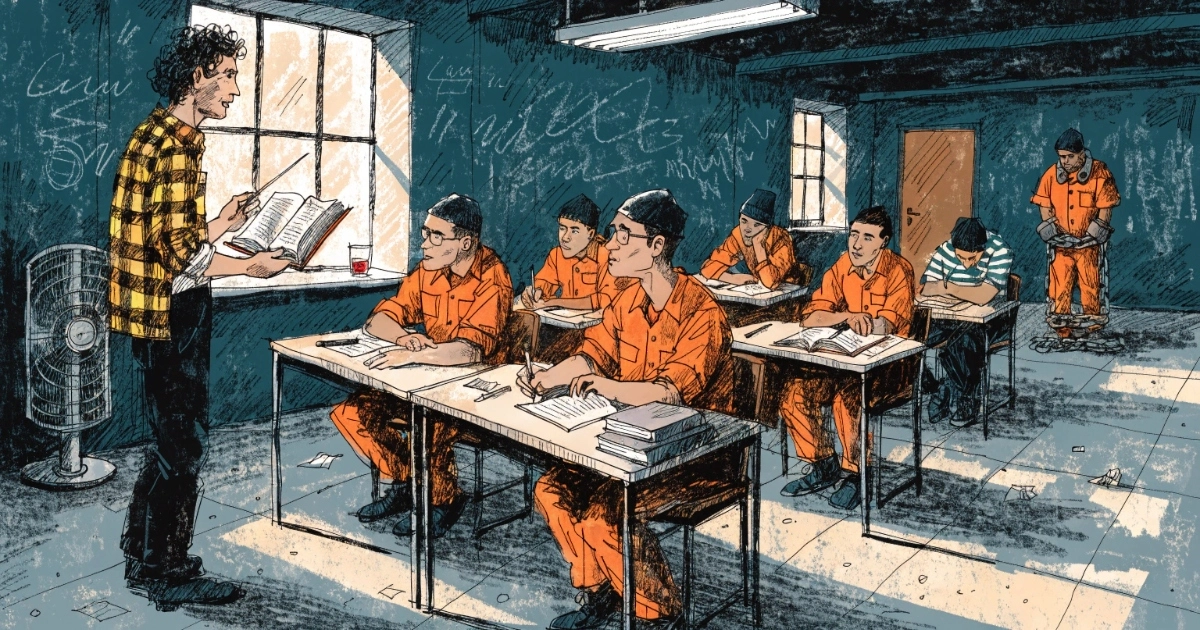
I often give lectures inside prisons, where I have many opportunities to communicate directly with inmates.
One day, the prison administration suddenly informed me that a group of inmates would soon be released. They hoped I could give them one final lecture the next morning, offering advice and encouragement before they returned to society.
As I stood at the podium drinking tea brought by an inmate, I suddenly heard a commotion outside the classroom.
Two armed guards escorted a prisoner in his forties into the room.
He was a dangerous criminal.
His legs were shackled, his hands were handcuffed, and he held a heavy iron ball - the strictest security measure used in prison to prevent escape.
The prisoner stood straight, bowed deeply to me, and slowly walked to the back of the classroom before sitting down on a bench.
The guards stood on both sides with serious expressions.
In more than two years of teaching in prison, I had never seen such a situation before.
Clearly, this prisoner had received special permission to attend my lecture.
Perhaps it was the weathered expression on his face - the look of someone who had experienced many hardships - that influenced me.
I abandoned my prepared lecture and wrote a new topic on the blackboard:
“Accept Your Fate, But Keep Fighting for a Better Life.”
I told my own story to encourage the inmates.
After graduating from university, I worked as a middle school teacher.
Because I did not graduate from a formal teachers’ college, the school assigned me to teach two classes known as “troublemaker classes.”
The students were often mocked by teachers and parents.
Many boys were rebellious, and many girls were expected to work in textile factories after graduation.
I understood their anger at being looked down upon.
So I approached them as a friend, encouraging them to live honestly and pursue a life of dignity.
Over time, the classes became calmer and caused fewer problems.
Eventually the principal recommended me to study psychology at a teachers’ university.
I later became a counseling teacher.
After retiring at the age of fifty, I volunteered to work in prisons, encouraging inmates to live carefully and do good deeds for society.
The fifty-minute lecture ended quickly.
When the bell rang, the heavily guarded prisoner stood up, bowed to me again, and left.
A few days later, I received a letter signed simply:
“Your Student.”
The letter began:
“Teacher, when you read this letter, I may already be dead. I will soon be executed according to the law.”
The writer explained that he was a criminal who had committed violent crimes involving firearms.
One day, while waiting in the prison yard before being taken to court, he saw me from a distance.
Even though many years had passed, he immediately recognized me.
He asked the guards what I was doing there and learned that I was volunteering as a lecturer.
At that moment, memories of his youth returned.
He wrote that when he was in the eighth grade, I had been his Literature teacher and homeroom teacher.
He said the students loved my classes because I told stories so vividly.
However, he admitted he had been a mischievous student.
One day during a math class, he sneaked outside the school wall and stole papayas from a nearby orchard.
Unfortunately the owner discovered him.
He ran away and returned to school just before my Literature class began.
But the orchard owner followed him to the school and identified him.
After talking with the owner, I quietly took out 200 dollars and paid for the stolen fruit.
Later I scolded the student and warned him that if he stole again, I would let the police handle it.
As punishment, I made him run two thousand meters.
After the winter break, he never returned to school.
He began wandering outside.
He often told his friends about how his teacher had paid for the stolen fruit.
His friends praised me for protecting the student instead of sending him to the discipline office.
He explained that his father was an illiterate rice mill worker who was honest but often bullied.
Seeing his parents suffer humiliation made him believe that only strong and violent people could survive.
So he joined criminal gangs for more than twenty years.
Eventually he was arrested and sentenced to death.
Before his execution, he requested one final wish - to listen to my lecture once more.
His request was approved just one hour before my class.
As he listened to me speak about life, he felt like he had returned to his teenage years, sitting in a classroom again without worries.
Near the end of the letter, he wrote:
“A life filled with hatred is a painful life. Hatred means taking someone else’s mistakes and using them to torture ourselves until we destroy our own lives.”
He said that if he had understood this wisdom earlier, his life might have been different.
He hoped other prisoners would remember those words and live peacefully.
His letter ended with:
“If there is another life, I hope I can still be your student.”
Moral of the story
A teacher’s words can influence a student’s life for many years.
Kindness and guidance may plant seeds that grow long after the moment has passed.
What This Teaches
In modern society, educators, parents, and mentors often underestimate the long-term impact of their actions.
This story reminds us that even small acts of kindness or simple words of guidance can shape someone’s life forever.
Story 2 - Many Faces of Life On The Bus

If you pay attention, everyday life is full of small stories.
A simple bus ride can become one of the most powerful moral stories-filled with kindness, misunderstanding, and unexpected life lessons. These short stories may seem ordinary at first, but each one carries a deeper meaning about people and human nature.
A city bus is like a moving stage of real life.
The window feels like a screen constantly changing scenes. The driver becomes the quiet host, while passengers are unplanned actors playing their roles without scripts.
On this moving stage, different scenes appear: kindness, small acts of selfishness, arguments, laughter, and moments that quietly teach us something.
Whenever I arrive in a new city, I often start understanding it by taking a bus.
On the bus, I enjoy listening to people-especially students.
Middle school students returning home often talk in ways that sound surprisingly vivid. In their stories, teachers are not just teaching, but performing.
They laugh about a teacher’s strange voice, his awkward gestures, or how his shirt lifts while writing on the board.
Listening to them, I couldn’t help but reflect on myself.
At that time, I was also teaching part-time.
Did I look just as strange to my students?
Did they laugh about me the same way?
Sometimes, small stories reveal uncomfortable truths.
Women on the bus often talk about everyday life.
They discuss sleep problems, rising prices, family concerns, or small frustrations at work.
Some speak softly and calmly, keeping their lives private. Others speak loudly, joking and laughing without hesitation.
Their conversations may seem trivial, but they reflect real life-family stories, pressure, responsibility, and survival.
The bus, at that moment, feels less like transport and more like a shared human space.
Over time, the bus became my notebook of life.
In those crowded rides, I began to notice parts of myself:
Sometimes courage.
Sometimes weakness.
Sometimes patience.
Sometimes laziness.
These small observations felt like quiet life lessons.
One day, a man cried loudly on the bus.
Five thousand yuan had been stolen from him-money meant for his mother’s surgery.
His crying was raw and painful.
People around him began to donate money. I gave a small amount, and others followed.
That moment felt like one of those rare kindness stories-where strangers come together to help.
But later, someone asked me:
“What if he was lying?”
That question stayed in my mind.
Was it real? Was it a performance?
A few days later, the truth came out. The police recovered the money and even helped him further.
It turned out to be real.
And that moment became a reminder:
Sometimes, trust is worth the risk.
Another day, two young men ran after the bus.
The driver refused to stop.
People complained, but the driver calmly said:
“They are pickpockets.”
Suddenly, everything changed.
What looked like urgency was actually deception.
This small moment taught us a powerful lesson:
Not everything is as it seems.
One evening, I met an elderly woman waiting at a bus stop.
She carried heavy bags and asked me for the time several times.
She was waiting for her daughter.
When her daughter finally arrived and asked, “Have you been waiting long?”
The mother smiled and said:
“No, I just got here.”
That simple sentence carried deep love.
She didn’t want her daughter to worry.
This was one of those quiet family stories that stay with you.
There was once a loud girl on the bus.
She spoke roughly, dressed boldly, and annoyed everyone.
People judged her immediately.
Then suddenly, she shouted out the window:
“Mom! I’ll bring you new clothes!”
Below the bridge, her mother-a street cleaner-looked up.
At that moment, everything changed.
The girl we judged turned out to be full of love and responsibility.
This was a powerful reminder:
We often misunderstand people before we truly see them.
One snowy night, I slipped repeatedly while walking home.
Suddenly, a light appeared behind me.
It was a bus driver, using the headlights to guide my path.
He didn’t say anything. He just helped.
That quiet act of kindness stayed with me.
Sometimes, the smallest actions are the most meaningful.
A bus is more than transportation.
It is a place where stories unfold.
Stories of kindness, struggle, misunderstanding, and humanity.
These are not just short stories-they are real stories with meaning.
Moral of the story
How you present a problem can change how people respond to it.
From this story, we learn:
- Perspective influences decisions
- Communication matters more than we think
- Small changes in wording can create big results
- Understanding others’ thinking leads to better outcomes
What This Teaches
In real life, we often think we understand people just by looking at them.
But this story shows something different.
On a simple bus ride, you can see kindness, selfishness, love, and misunderstanding all at once. These small short stories in everyday life remind us that everyone is carrying something we cannot see.
This is why stories like this are still meaningful today.
They are not just inspirational stories or bedtime stories. They are reflections of real human behavior-stories that teach a lesson without needing dramatic events.
For kids and adults alike, these kinds of moral stories help us develop empathy, patience, and better judgment.
Before judging someone, we should remember:
- every person has a story
- every action has a reason
- every moment can teach us something
That is the true moral of the story.
Story 3 - The King’s Secret

One day, a king was walking in his garden when he saw a beautiful rainbow-colored little snake trapped in a thorny fence.
Kind-hearted, the king carefully opened the fence and rescued the snake. He said to it, “Next time you come out to play, be more careful.”
The next day, while strolling in the garden again, the king encountered a magnificently dressed and dignified man. Surprised, the king asked, “Who are you? How did you enter the royal garden?”
The man replied, “Your Majesty, there’s no need to be alarmed. I am the Dragon King from the Dragon Palace. I came today to express my gratitude.”
“Why do you thank me?” the king asked.
The Dragon King said, “Yesterday, my youngest daughter secretly came to your garden to admire the flowers. She was accidentally trapped in the fence. Thankfully, you rescued her in time-otherwise, she would have died under the sun. I don’t know how to repay your great kindness to our Dragon Palace. Whatever you wish, just say it, and I will grant it.”
The king thought for a long time before replying, “My palace is full of treasures, and I lack nothing. But if possible, I wish to understand the language of animals and birds. I often observe them and find them fascinating and adorable. It’s just a pity I can’t understand what they’re saying.”
The Dragon King nodded. “That is not difficult. But if you wish to understand their language, from today on, you must not eat their flesh. You cannot harm animals and still understand them. After observing a vegetarian fast for seven days, you will naturally gain this ability.”
After saying this, the Dragon King bowed deeply and disappeared. As the king stood there in surprise, the Dragon King’s voice echoed in the air:
“But you must never let anyone know that you can understand animals. Once this secret is revealed, your ability will vanish.”
The king followed the instructions, ate vegetarian food, and fasted for seven days. On the evening of the seventh day, while having dinner, he suddenly began to understand animal speech.
He heard two moths resting on a beam talking.
The female moth said, “Hey! You useless thing! Go pick up that grain of rice on the ground for me!”
The male moth replied, “You crazy woman! If you want it, go get it yourself!”
The female moth snapped, “Can’t you see how fat I am? I can’t even fly! You used to say you loved me-now you won’t even pick up a grain of rice!”
The male moth scoffed, “That’s your own fault! I told you to lose weight, but you refused. You’re lazy and greedy-that’s why you’re so fat! Don’t you see the king and queen are eating right now? If I fly down to pick it up, I’ll risk my life! Or have you fallen for someone else and want to kill your husband?”
Hearing this, the king couldn’t help but burst out laughing.
The queen looked puzzled. “What are you laughing at?”
“Nothing, nothing,” the king replied, falling silent.
After dinner, the king and queen drank tea. Then he heard two geckos on the roof talking.
The male gecko said, “Move aside, I need to get through!”
But the female gecko blocked his way. “It’s so late-where are you going? Are you going to see that vixen next door again?”
The male gecko said, “Don’t be ridiculous! How many times have I told you-I have nothing to do with her! She’s a devoted wife and mother, not some ‘vixen.’”
“Oh really?” the female gecko snapped. “You heartless creature! You always argue with me because of her! Why do you always defend her? If there’s nothing going on, why do you keep going next door?”
“I’m not going next door-I just want to get out and clear my head! I can’t take this anymore! Now move!”
The female gecko began to cry. “I won’t let you pass! You heartless thing! You once said we’d never be apart, life after life-but now, not even a month together, and you’re already fed up… sob… sob…”
They struggled for a while and fell from the roof together, both losing their tails.
The male gecko sighed, “What bad luck… this is the third time this month I’ve broken my tail.”
Hearing this, the king burst into laughter again, even spilling his tea.
The queen grew suspicious. “What are you laughing at?”
“Nothing, nothing,” the king said again, remaining silent.
From the day the king gained the ability to understand animals, he often laughed for no apparent reason. This troubled the queen deeply. She thought, “The king must be hiding an important secret. If I don’t threaten him with my life, he’ll never tell me.”
One day, the king laughed again without reason. The queen became furious.
“If you don’t tell me today why you keep laughing, I will kill myself right in front of you!”
The king felt distressed. He couldn’t reveal the secret, so he said, “Don’t do anything rash. Let me go out for a walk and clear my mind. I’ll tell you when I return.”
He left the palace, while the queen secretly felt pleased and waited.
As the king walked past the sheep pen in the garden, he heard a conversation between two sheep.
The ewe said, “My dear, I’m pregnant and can’t walk. Come carry me!”
The ram replied, “You’re walking just fine-why should I carry you?”
The ewe said, “If you don’t carry me, I’ll kill myself right in front of you!”
The ram laughed. “Kill yourself? Don’t be ridiculous. Where did you learn such a foolish idea?”
The ewe said, “I just heard the king and queen arguing. When the queen didn’t get what she wanted, she threatened suicide-and the king immediately gave in! Suicide is such a powerful weapon! I want to try it on you, to prove you still love me like before!”
The ram laughed loudly. “You really are foolish! Suicide is the most ridiculous and stupid act in the world. Only humans are foolish enough to do that. No other animal would be that stupid. Every creature values its life and has its own will. If you kill yourself, I can’t die for you-what does that have to do with me? So now, will you imitate useless humans, or will you be a dignified sheep and walk over here yourself?”
Hearing this, the ewe quietly walked toward the ram.
Outside the pen, the king murmured to himself, “Am I, as a king, less wise than a ram?”
The king returned to the palace and saw the queen still waiting.
She said, “If you don’t tell me today why you keep laughing for no reason, I will kill myself!”
The king replied, “When I laugh around you, it’s because I’m thinking of the happy times we shared in the past. I think of them while drinking tea, while eating-at every moment.”
The queen asked, “Why don’t you share those thoughts with me?”
The king smiled gently. “Keeping them in my heart makes them sweeter. Once spoken, they lose some of that sweetness. It’s like a fragrant glass bottle-once opened, the scent fades and can never be fully savored again.”
The queen smiled, gazing at the king with affection.
Just then, the king heard the female moth say to the male moth, “You should learn from humans-they speak such sweet words.”
The tailless female gecko said to the male gecko, “If you spoke to me like that, I’d never argue with you again.”
The king laughed once more.
Liking is a gentle kind of love; Love is a deep kind of liking.
A person doesn’t find meaning in life by receiving a lot of love-but by giving it.
Moral of the story
True wisdom is knowing when to keep a secret, valuing life, and not using extreme actions to control others. Love is shown through care and understanding, not pressure or threats.
What This Teaches
- Not every truth needs to be told. Some things are better kept in the heart.
- Threats and emotional pressure are not healthy ways to get what you want.
- Real love is patient, kind, and respectful.
- Every life has value. Choosing to live with dignity is always wiser than acting out of impulse.
Story 4 - Know Yourself and Go Full Power

After being driven into reservations by white settlers, Native Americans had long lived in poverty. But one day, their fortune finally changed. Careful exploration confirmed that beneath the land assigned to them lay a vast reserve of oil.
As soon as the news spread, major companies rushed in, competing to offer high prices to buy drilling rights from the tribal chief who owned the land. Guided by the white businessmen, the chief, who became rich overnight, decided to change his old habit of riding on horseback and ordered a top-of-the-line Cadillac luxury car.
The car was delivered on a truck, attracting envious looks from the tribe. The chief studied his new prized possession for a long time and finally figured out how to “operate” it. He ordered his people to bring two horses and tied them to the front bumper of the Cadillac, letting the horses pull the car forward.
Although controlling the horses with a whip from inside the driver’s seat was inconvenient because of the windshield, the chief accepted it. After all, the white men had told him that this car was a symbol of status, and even the President of the United States rode in the same model. Every day, he proudly rode around nearby villages in his Cadillac, pulled by two horses, showing off his wealth.
Once he became wealthy, the chief began to care about dignity and status. He started learning English, hoping to keep up with the modern world. After he could understand a little English, one day he casually opened the car’s manual.
What he read made him furious.
The manual clearly stated that the car had 260 horsepower. Suddenly, the chief realized something. No wonder the car, though luxurious, felt slower than his old horse carriage. The problem must be that this car was supposed to come with 260 horses to pull it. The white businessmen must have cheated him and kept the rest of the horses!
With his limited English, the chief immediately wrote an angry complaint letter to the car company, demanding compensation for the horses he was owed.
When the Cadillac company received this strange letter, they didn’t fully understand it but didn’t dare ignore a customer. They quickly sent a representative to investigate.
When the representative arrived at the reservation and saw the Cadillac with two horses tied to its front bumper, he was completely confused. The chief angrily demanded to know why the 260 horses had not been delivered.
After a long and exhausting exchange, the representative began to understand the situation. He asked, “Where is the car key?”
The chief shook his head. “What key? I’ve never seen one.”
The representative sighed with a smile. He untied the horses and invited the chief to sit inside the car. Then he took the key from the glove compartment, inserted it into the ignition, and gently turned it.
Instantly, the engine roared to life. The 260 horsepower hidden within began to rumble through the exhaust.
The representative nodded to the chief, shifted gears, and pressed the accelerator. The tires screeched as the car surged forward at full speed for the first time, powered by all 260 horsepower.
This story may make you laugh, but does it also bring a sense of sadness? While we may mock the ignorant chief, perhaps the one truly being mocked is ourselves.
Each of us is born with unlimited potential. Yet throughout our lives, we often rely on only “two horses” of power to drive our own high-performance “luxury car.”
This confusion has been passed down from generation to generation. And surely, you would not want it to continue into the lives of those you care about. The reason it exists may be just like in the story: we have not yet found the key that unlocks our full power.
Change your mindset. Surround yourself with a successful environment. Read books that inspire you. Use every good idea you can think of to unlock your potential. Let limiting beliefs end with you, and create a future of greater opportunities for the next generation.
May this story become the key to your own Cadillac. With reflection, all it takes is a small shift in attitude to ignite your drive toward success and move forward at full speed.
As Archimedes once said: “Give me a lever long enough and a firm place to stand, and I can move the world.”
Moral of the story
Your potential is far greater than you think. Without the right understanding and mindset, you may never use even a fraction of it.
What This Teaches
- Knowledge is the key to unlocking your true ability.
- Misunderstanding your own strengths can hold you back.
- Environment, learning, and mindset shape how far you can go.
- Stop limiting yourself. When you find the “key,” your life can accelerate in ways you never imagined.
Story 5 - The Zen Temple
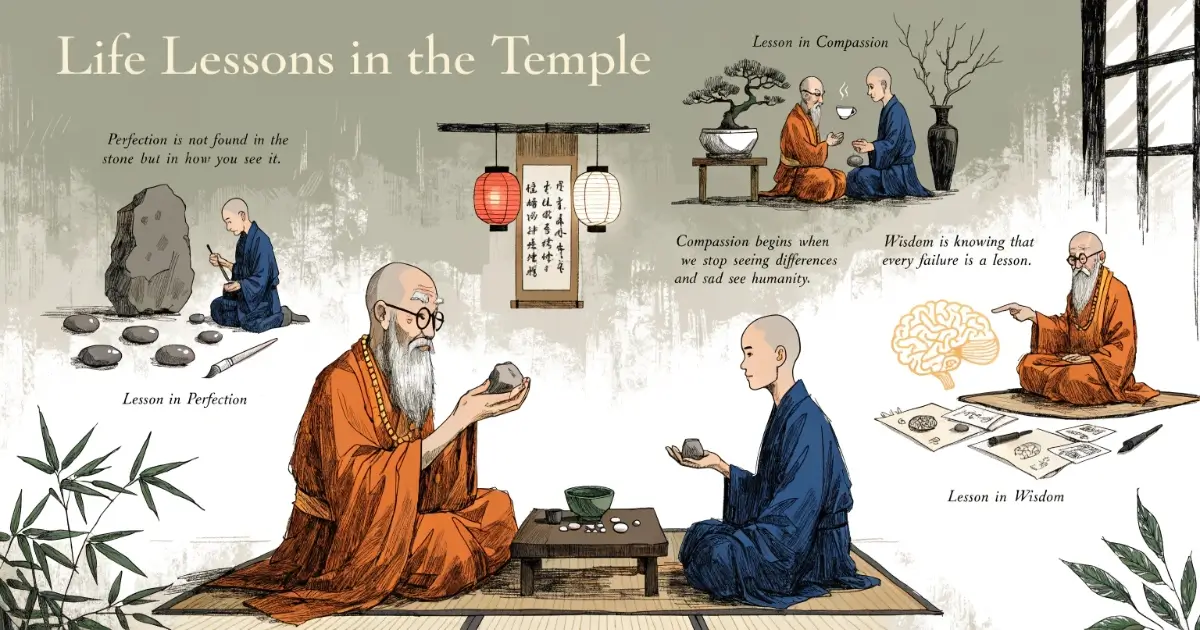
Perfection
A young monk sat on the ground crying, surrounded by scraps of paper covered in writing.
“What’s wrong?” the old monk asked.
“I can’t write well,” the young monk said.
The old monk picked up a few sheets and looked at them. “These are quite good. Why did you throw them away? And why are you crying?”
“I just think they’re not good enough,” the young monk continued crying. “I’m a perfectionist. I can’t accept even the smallest mistake.”
“But who in this world can be completely without mistakes?”
The old monk gently patted him. “If you demand perfection in everything, get upset at the slightest flaw, and end up crying, then that itself is imperfect.”
Obsession with Cleanliness
The young monk picked up the papers from the ground and went to wash his hands.
Then he looked in the mirror and washed his face. After that, he even took off his pants and washed them again and again.
“What are you doing? You’ve wasted half the day washing things,” the old monk asked.
“I have a cleanliness obsession,” the young monk replied. “I can’t tolerate even a little dirt. Haven’t you noticed? Every time a visitor leaves, I wipe the chair they sat on.”
“Is that really cleanliness?” the master smiled. “You think the sky is dirty, the ground is dirty, and people are dirty. You may look clean on the outside, but your heart is troubled. That is not true cleanliness.”
Alms
One day, the young monk went out to collect alms and deliberately chose to wear old, worn-out clothes.
“Why did you pick that?” the master asked.
“Didn’t you say we shouldn’t care about appearances?” the young monk replied, a little defensive. “If I dress poorly, people will feel sorry for me and give more money.”
“Are you collecting alms, or begging?” the master glared at him. “Do you want people to pity you and give to you, or do you want them to respect you and, through you, help countless others?”
Just Staying Alive vs. Truly Living
On a hot day, the flowers in the monastery were wilting under the sun.
“Oh no, we need to water them!” the young monk cried, grabbing a bucket of water.
“Wait,” the old monk said. “The sun is too strong now. If you shock them with cold water, they will die. Water them later.”
By evening, the flowers looked completely dried out.
“If we had watered them earlier…” the young monk muttered. “They must already be dead. No amount of water can save them now.”
“Stop talking. Water them,” the old monk instructed.
After watering, not long passed before the drooping flowers slowly stood upright again, full of life.
“Amazing!” the young monk exclaimed. “They were barely hanging on, just trying not to die.”
“That’s not correct,” the old monk said. “They were not just trying not to die. They were truly living.”
“What’s the difference?” the young monk asked, lowering his head.
“There is a big difference,” the old monk said, patting him. “I’m over eighty years old. Am I just surviving, or am I truly living?”
After evening practice, the old monk called the young monk over. “Have you figured it out?”
“No,” the young monk said quietly.
The old monk tapped him lightly. “Foolish child. Those who live in fear of death are merely surviving. Those who look forward each day are truly living.”
“If you are given one day of life, live that day fully. Those who spend their lives fearing death, praying only to become enlightened after death, will never reach enlightenment.”
Just a Bowl of Rice
One day, two frustrated young men came to visit the master.
“Master, we are being bullied at work. It’s unbearable. Should we quit our jobs?” they asked.
The master closed his eyes. After a long pause, he said only five words: “It’s just a bowl of rice.”
Then he waved them away.
When they returned to work, one of them immediately resigned and went back home to farm. The other stayed.
Ten years passed quickly.
The one who returned to farming applied modern methods and improved crop varieties. He became an agricultural expert.
The one who stayed in the company also did well. He endured hardship, worked hard, and gradually earned recognition, eventually becoming a manager.
One day, they met again.
“How strange,” said the farmer. “The master gave us the same five words, ‘just a bowl of rice.’ I understood it as: life is simple, why cling to a job? So I quit.”
He asked the other, “Why didn’t you follow the master’s advice?”
“I did,” the manager smiled. “The master said, ‘just a bowl of rice.’ So I told myself: I’m just working for a living. I stopped arguing, stopped taking things personally, and just did my job well. Wasn’t that what he meant?”
They went back to visit the master again. Now very old, he closed his eyes and after a long pause said five words:
“It’s just a matter of thought.”
Then he waved them away.
The Zen Monastery of Heaven and Earth
Later, the old monk passed away, and the young monk became the abbot.
He always dressed neatly and carried a medical kit, traveling to the dirtiest and poorest areas. There, he cleaned wounds and changed bandages for the sick, returning to the monastery covered in dirt.
He also personally went out to collect alms, but whatever he received with one hand, he gave away with the other to help those in need.
He rarely stayed in the monastery, and it was never expanded. Yet his followers grew more and more. They followed him across mountains and seas, to remote villages and fishing ports.
The young monk once said:
“When my master was alive, he taught me what perfection truly is. Perfection is striving to make the world better.”
“He also taught me what cleanliness means. Cleanliness is helping those who are unclean become clean.”
“He taught me what collecting alms means. It is about connecting people, helping them support each other, and creating good relationships.”
“As for what a monastery is, it doesn’t have to be in the mountains. It should exist among people. North, south, east, west, everywhere is a place to share wisdom. Between heaven and earth, that is my monastery.”
Moral of the story
True wisdom is not about perfection, appearance, or rigid thinking. It is about perspective, compassion, and living meaningfully in the real world.
What This Teaches
- Perfection is not flawlessness but improving the world around you.
- True cleanliness comes from a clear and kind heart.
- Life is shaped by your mindset, not just your situation.
- There are many right paths. What matters is how you understand and act.
- Real purpose is found in helping others and living with awareness.
Story 6 - Repeating Someone Else’s Words
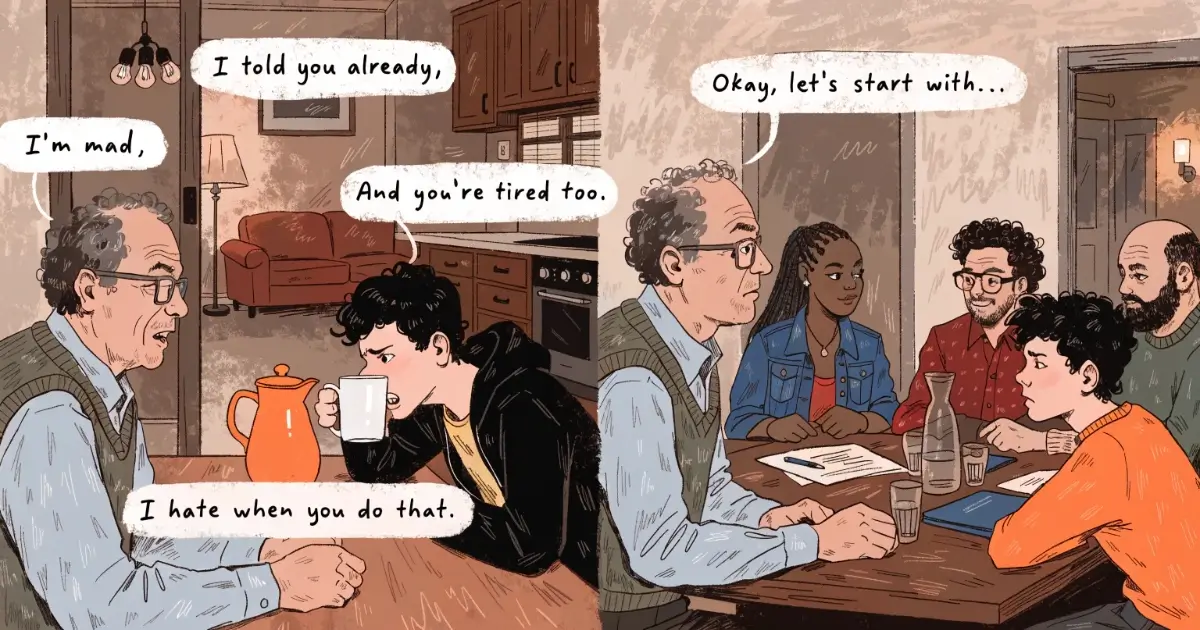
A successful boss could manage hundreds of employees with ease, yet he couldn’t manage his own son. That is, until one day, when he tried something simple: repeating what his son said. Everything began to change.
Mr. John was a factory owner in Taichung, running an export processing business with five to six hundred employees. He was deeply involved in both operations and management, achieving strong results. In meetings, he was confident, decisive, and commanding, like a general leading a great army.
But when it came to his son, he felt completely helpless. The generation gap between them was impossible to fill. Every time they met, within just a few sentences, arguments would erupt. Tables were slammed, doors were shut, and the house turned chaotic.
One evening, another argument broke out because his son came home late. Just as tensions peaked, his son suddenly stopped and said slowly:
“Dad, arguing like this won’t solve anything. Can I ask you to repeat what I just said?”
“What?” Mr. John was stunned. He had never expected such a strange request.
“You said… you said… that as a father who is very capable, you naturally look down on your son.”
“That’s not what I said. Think again. Did I really say that?”
“You brat! Then what did you say? Why don’t you repeat your own words?”
The son suddenly laughed. “See? You haven’t been listening to me at all. Those words are your own assumptions. I never said that.”
“We’re supposed to communicate, right? Then when I speak, you repeat what I said. Then when you speak, I’ll repeat yours.”
“Who has time for that nonsense? Are you trying to drive me crazy?”
“Dad, let’s just try it. Otherwise, we’ll keep arguing forever. Think carefully. What did I actually say?”
Mr. John paused and finally admitted, “I really don’t remember. Say it again.”
“Alright,” the son said. “I said: my father is very capable. I admire him, but at the same time, I feel pressure because I’m afraid I can’t keep up.”
When Mr. John thought about it calmly, he realized it made perfect sense. Why had he gotten so emotional before?
That night, for the first time, father and son talked for two hours without arguing. Even Mr. John found it unbelievable.
The next morning, although he hadn’t slept enough, he felt refreshed and energized. He arrived at the company early.
There was an important purchasing meeting that morning. They needed to decide whether to buy machines worth ten million from the United States or Japan. The purchasing department preferred the Japanese machines because they were cheaper and of good quality, but the engineers supported the American ones.
At the meeting, Mr. John invited the chief engineer to speak. Normally, this was just a formality. The engineer knew that experienced bosses often made decisions on their own. From past experience, he assumed the boss had already decided to choose the cheaper option.
So he spoke half-heartedly for less than five minutes and said he had nothing more to add.
In the past, Mr. John would have taken over at this point and made the final decision himself. But this time was different.
“Chief Engineer, let me repeat your main points. Tell me if I understood correctly. The Japanese machines are cheaper and not bad, but if something goes wrong, after-sales service becomes a problem. Due to language barriers, their staff cannot communicate directly with us. Translators may not understand technical details, so we won’t fully grasp the issue. If the same problem happens again, we’ll still need to call them, which may delay production. In the long run, buying American machines may actually be more cost-effective.”
As Mr. John repeated his points, the chief engineer’s eyes lit up. He became engaged again and started adding more details. Soon, the discussion became lively, with everyone contributing ideas.
If people want to argue, they only focus on attacking each other. But if they want to solve a problem, they must sincerely try to understand each other.
Repeating what the other person says helps in two ways. First, it reassures them that you truly understand and there is no misunderstanding. Second, it gives you time to process their thoughts before responding.
And often, you will find that what used to be an argument becomes meaningful communication.
Moral of the story
If we refuse to help others when we have the ability, we cannot expect others to help us when we need it.
Kindness and generosity often return in ways we cannot see immediately.
What This Teaches
In modern society, many people focus primarily on personal gain and success.
However, communities thrive on empathy, cooperation, and generosity.
This story reminds us that compassion toward others is not only morally valuable but also essential for building meaningful relationships and a supportive society.
How to Use These Bedtime Stories (For Better Sleep)
Longer bedtime stories can help your mind transition into rest by maintaining gentle focus over a longer period of time.
For best results:
- Read slowly without rushing
- Avoid screens or distractions
- Let the story guide your thoughts naturally
These long bedtime stories for adults to fall asleep are most effective when paired with a quiet and comfortable environment.
Reflection Questions
- What emotions did the story bring up?
- Did you feel more relaxed as the story progressed?
- What part stayed with you the most?
- Would you continue this story tomorrow?
More Stories You May Like
→ Prefer a lighter and more uplifting mood
→ Browse short bedtime stories for adults
→ Find more calming bedtime stories for adults