The Zen Temple: A Moral Story on Wisdom
A profound inspirational story about a young monk learning life lessons from his master about perfection, life, and compassion
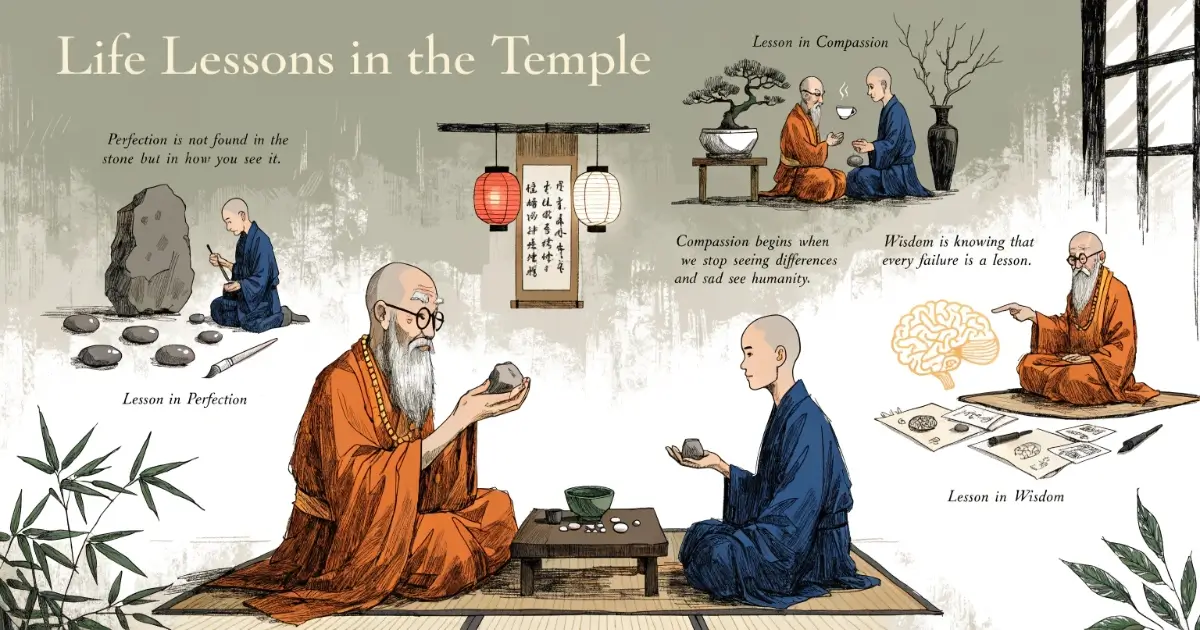
Perfection
A young monk sat on the ground crying. Papers filled with writing were scattered around him.
“What happened?” the old monk asked.
“I wrote badly.”
The old monk picked up a few sheets and looked at them.
“They look good. Why throw them away?”
“I still think they are not good enough,” the young monk cried.
“I am a perfectionist. I cannot tolerate any mistakes.”
The old monk smiled.
“Who in this world never makes mistakes?”
“When you demand perfection and become angry or sad whenever things are not perfect, that itself becomes imperfect.”
Cleanliness
The young monk picked up the papers and washed his hands.
Then he washed his face and even washed his clothes repeatedly.
“What are you doing?” the old monk asked. “You have wasted half a day washing.”
“I have an obsession with cleanliness,” the boy replied.
“I cannot tolerate anything dirty.”
The master smiled.
“You dislike dirty skies, dirty ground, and dirty people. Your appearance may be clean, but your heart has become sick.”
Begging for Alms
One day the young monk chose a torn robe before going to ask for alms.
“Why that robe?” the master asked.
“You said appearances do not matter,” the boy replied.
“And people may give more if they feel sorry for me.”
The master frowned.
“Are you asking for alms or begging for pity?”
“Do you want people to support your mission, or do you want them to feel sorry for you?”
Surviving vs Living
One hot summer day, the flowers in the Zen temple began to wilt under the burning sun.
“Oh no! We must water them quickly!” the young monk shouted as he hurried to bring a bucket of water.
“Wait,” the old monk stopped him.
“The sun is too strong right now. If the flowers suddenly receive cold water in this heat, the shock may kill them. Wait until later in the evening.”
By sunset, the flowers looked completely dried up, almost like withered vegetables.
The young monk murmured unhappily:
“If we had watered them earlier, they wouldn’t have become like this.
Now they must be completely dead.”
“Stop complaining. Water them,” the master instructed.
The young monk poured the water over the flowers.
After a short while, something amazing happened.
The flowers that had been hanging down lifelessly slowly lifted themselves up again. Soon they were standing tall, fresh, and full of vitality.
“Wow!” the young monk exclaimed.
“They are amazing! They endured all that heat and struggled not to die.”
The old monk corrected him gently:
“That is not struggling not to die.
That is simply living well.”
The young monk lowered his head and asked:
“What’s the difference?”
“Of course there is a difference,” the master replied.
“Look at me. I am already over eighty years old.
Do you think I am merely struggling not to die, or truly living my life?”
That evening after the temple prayers, the old monk called the young monk again.
“Well? Have you understood now?” he asked.
The young monk shook his head.
The master tapped him lightly and said:
“A person who lives every day fearing death is merely struggling to stay alive.
But a person who looks forward and lives each day fully is truly living.”
“If you are given one more day of life, then live that day well.
Those who spend their whole lives praying out of fear of death, hoping to become enlightened after they die, will never truly achieve enlightenment.”
Only a Bowl of Rice
One day two frustrated young men came to visit the master.
“Master,” they said,
“We are constantly bullied and treated unfairly in our office. We feel miserable. Should we quit our jobs?”
The master closed his eyes. After a long pause he spoke only five words:
“It is only a bowl of rice.”
Then he waved his hand, signaling them to leave.
When they returned to work, one of them immediately submitted his resignation and went back to his hometown to become a farmer.
The other stayed in the company and continued working.
Ten years passed quickly.
The one who became a farmer used modern agricultural methods and improved crop varieties. Eventually he became a respected agricultural expert.
The one who stayed in the company did not do badly either. He endured the hardships, controlled his temper, and worked diligently. Gradually he gained recognition and eventually became a manager.
One day the two met again.
The agricultural expert said:
“It’s strange. When the master told us ‘It is only a bowl of rice,’ I immediately understood. I thought: life is just about making a living. Why suffer in an office job? So I resigned and started farming.”
He then asked the manager:
“Why didn’t you follow the master’s advice?”
The manager laughed.
“I did follow it.”
“The master said it is only a bowl of rice. So whenever I felt angry or humiliated at work, I reminded myself that I was simply working to earn my bowl of rice. I argued less, complained less, and focused on doing my job well.”
“Wasn’t that what the master meant?”
The two men later returned to visit the master again.
By then he had grown very old.
He closed his eyes for a moment and then replied with five words:
“It is only a matter of one thought.”
The Zen Temple Everywhere
After the master passed away, the young monk became the abbot.
He traveled to poor places to treat the sick and help the suffering.
Money he collected from alms was given to the needy.
He rarely stayed inside the temple, yet more people followed him.
He said:
“Perfection means helping the world become better.”
“Cleanliness means helping others become pure.”
“Alms mean connecting people so they can help one another.”
“The temple is not only in the mountains.”
“The whole world is my temple.”
Moral of the Story
True wisdom lies in perspective and compassion.
Life’s meaning is not found in perfection or appearance, but in helping others and living with purpose.
Why This Story Still Matters Today
In a fast-paced world where people chase perfection and success, this Zen story reminds us that wisdom often lies in simple truths.
A single shift in perspective can change how we see life, work, and our purpose in the world.
Related Moral Stories
If you enjoyed this story, you may also like: