The Wisdom Story of Sharing Porridge
A powerful moral story about fairness, responsibility, and how the right system can transform conflict into harmony.
Related Moral Stories
- Life Begins When You Set a Direction
- The Power of Perspective: A Scholar’s Dream
- Step Outside Your Circle to Grow
The Wisdom of Sharing Porridge
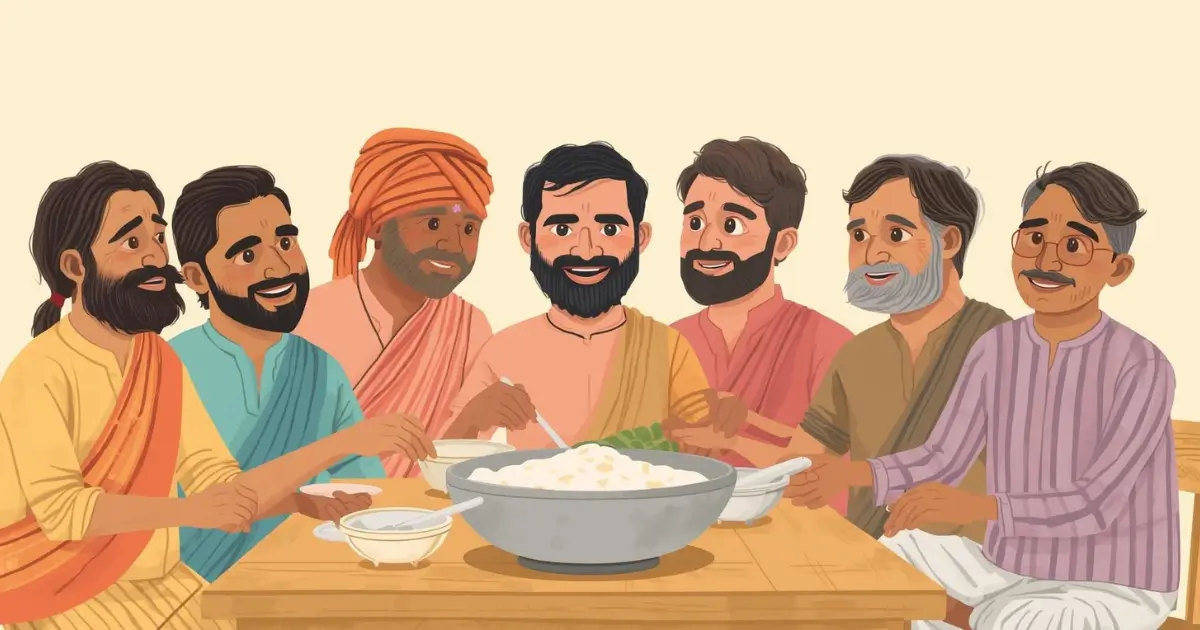
Once, there were seven people living together in a small place. Every day, they had only one pot of porridge to share among them.
The problem was simple but serious: there was never enough food for everyone.
At first, they decided to draw lots to choose who would divide the porridge each day. Each person would take turns.
However, after some time, they noticed a pattern. The person responsible for dividing the porridge would always give themselves the largest portion. As a result, each person only had one full meal per week, and that was on the day they were in charge.
This created dissatisfaction and quiet resentment.
When Power Leads to Corruption
To solve the issue, they came up with a new idea. They chose one person who was considered the most moral and trustworthy to divide the porridge every day.
At first, it seemed like a good solution.
But soon, problems began to appear again.
People started trying to please that person, offering favors and even small bribes, hoping to receive a larger portion. The once peaceful group became filled with tension, jealousy, and hidden competition.
The environment turned toxic.
When Systems Become Complicated
Still not satisfied, they tried another approach. They formed a three-person porridge committee and a four-person evaluation committee.
This sounded fair in theory.
But in reality, it only made things worse.
The committees argued constantly. They disagreed, blamed each other, and wasted time. By the time they finished discussing and dividing the porridge, it was already cold.
No one was happy.
A Simple and Brilliant Solution
Finally, they came up with a simple but powerful rule:
They would still take turns dividing the porridge. However, the person who divided it would be the last to choose a bowl.
This changed everything.
Now, the person dividing the porridge had a strong reason to be fair. If they gave themselves too little, they would suffer. If they divided it unevenly, they might end up with the smallest portion.
So naturally, everyone tried their best to divide the porridge as equally as possible.
Even if there were small differences, no one complained.
Peace returned. The group became harmonious, and their days grew better and happier.
The Deeper Meaning
This is one of those ethical stories that teaches a powerful lesson about fairness and responsibility.
The same seven people, the same amount of food, but different systems led to completely different outcomes.
Moral of the Story
The moral of the story is:
A fair system creates harmony, while an unfair system creates conflict.
From this story, we learn:
- Systems matter more than intentions
- Fairness builds trust
- Responsibility must be structured, not assumed
Why This Matters
In real life, whether in families, schools, or workplaces, many problems are not caused by people, but by systems.
This is why stories about responsibility and stories that teach lessons like this are so important.
If rules are unclear or unfair:
- People compete instead of cooperate
- Trust breaks down
- Conflict increases
But when systems are designed properly:
- People naturally act fairly
- Cooperation improves
- Everyone benefits
This story is a strong example of moral stories in English that go beyond simple lessons. It teaches leadership, fairness, and human behavior.
For anyone in a position of responsibility, this story offers a valuable reminder:
Do not just try to change people.
Change the system, and people will change naturally.
If you enjoyed this story, read more:
👉 Collection of 50+ wisdom small short moral stories in English